14 January, 2022
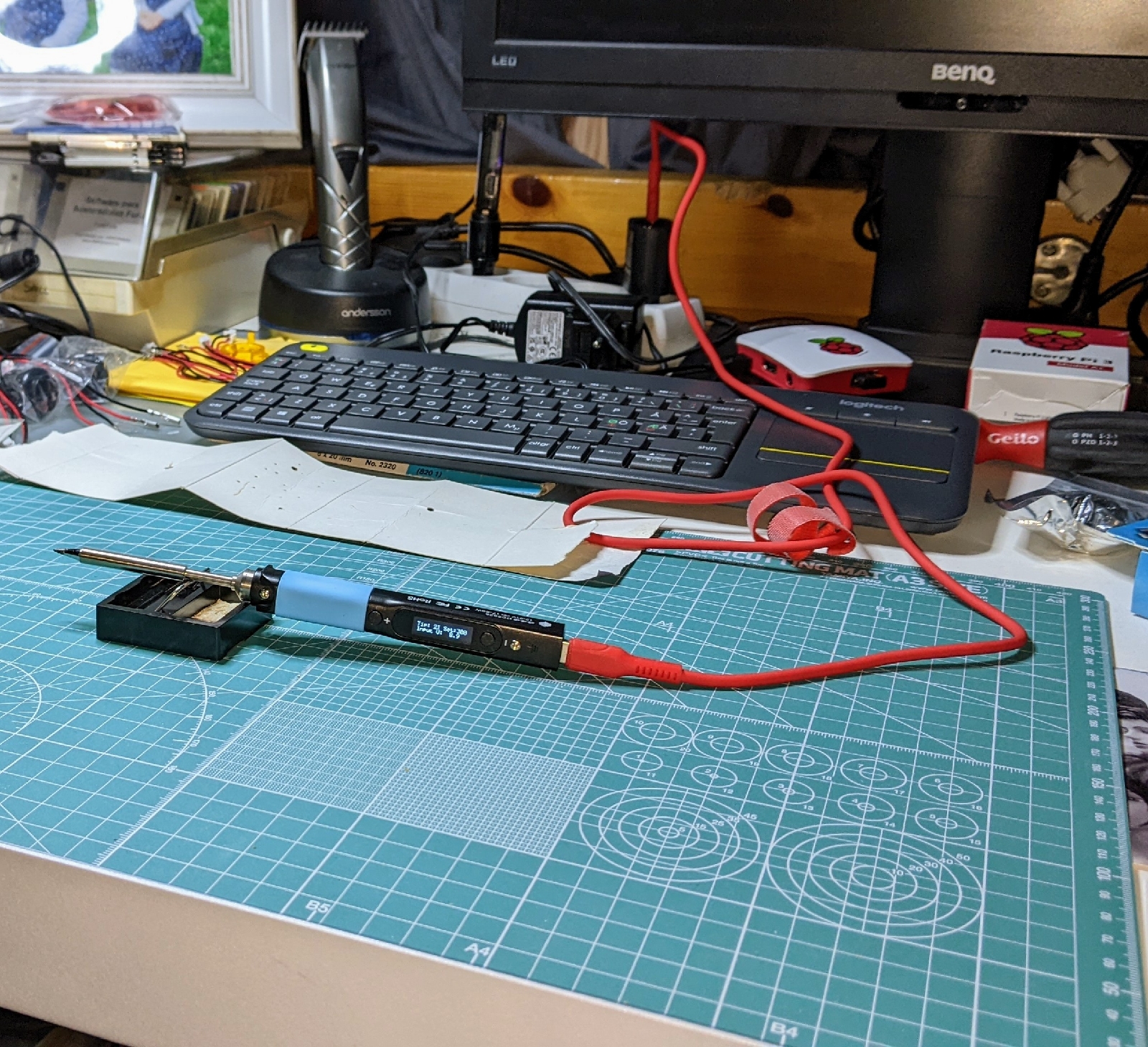
Pinecil - open-sauce solder pen
08 May, 2021
OpenTendo
The video is showcasing the build of an open-source hardware re-creation of the Nintendo Entertainment System (NES).
12 December, 2020
OSHW
Just recently browsed through Open Source HardWare projects online, and to my surprise there have been popping up a lot in later years.
Personally, I haven't been deep in hardware modding or creation. But I've done some soldering on old IC-boards for practise, like: re-flowing ICs, re-capping boards, stripping traces and an occasional botch-wire to repair traces.
Though I have been playing with the idea of making up a modular kit-PC for DOS use.
22 October, 2018
Linux Presentation Day!
Although... we actually don't host Linux Presentation Day here in Norway, I'd like to make people aware of this event however possible. So to the few who actually reads this blog, you're welcome ;) :P
https://linux-presentation-day.org/
17 April, 2018
when PIGS FLY!!
http://www.businessinsider.com/microsoft-azure-sphere-is-powered-by-linux-2018-4?r=US&IR=T&IR=T"After 43 years, this is the first day that we are announcing, and will be distributing, a custom Linux kernel," Microsoft President Brad Smith said
Yeah, well, OSS / Linux won...
01 November, 2017
To my doubters
Yes, seems I finally landed my dream-job =D It's not work, it's fun :)
I get to work with innovating and bleeding-edge technology every day, at my own terms, with all the tech-benefits I could wish for. Not to mention my contract-benefits, and office-benefits (sponsored gourmet coffee, UV-filtered water and Red Bull).
![]() |
| "Red Bull-fridge" |
Working with as smart people as I do is, well, very rewarding in itself. Finally, people at my own level! People who actually appreciates open-source and Linux!
To all my doubters and nay-sayers:
how's that Microsoft-programming job working out for you?
25 September, 2017
Bleeding-edge Android
This one however has been fixed. Faulty components have been replaced and a new warranty issued.
I didn't really worry about using an outdated phone (Nexus 5), since I had secured it as much as I would "be allowed". Yes, allowed. Our corporate overlords control more than you might think...
29 August, 2017
Happy Birthday Linux!
Happy Birthday Linux! Over a quarter (26yrs) of a century old, still going strong and conquering area after area in various technology-segments 😋😊😃
Yes, I know he didn't announce it on newsgroups this day, he did on August 25th.
But, as he says himself, he considers both dates as birthdays. The first as the announcement-date, and the second (today, August 29th) as the upload-date.
27 January, 2015
IT article-comments
Found this very amusing comment on G+ following this article:
Microsoft is a dead man walking. They represent the last man standing in the first great public software rip off of the 1980s. The won the brutal "slog" to dominance in that world but the result is a disaster for them. The corpse they stitched together from parts of dead competitors is obsolete and coming apart at the seams. Despite decades of effort and purchase of some of the world's finest companies, they can't make their software competitive on servers, cell phones, music players, or anything outside the rapidly shrinking x86 market. They can't compete with the free world. Unable to steal the current generation of free software by software patent Ponzi schemes, they must again pretend they love their users and competitors in a last ditch effort to raise another generation of coders to rip off. Nope, that's not going to happen.Funny, funny shit :P but does it also have some sense of truth to it? Maybe... maybe it does.
30 November, 2014
24 April, 2013
Funny comment :-P
This was a response to "Correct me if I'm wrong" posted by an irrate Linux FUD-er. ( http://www.zdnet.com/six-open-source-security-myths-debunked-and-eight-real-challenges-to-consider-7000014225/ )
Prove that Linux gets hacked. It's something never done here.
If you feel that strongly about it, post how and where you got hacked. I'm waiting.anonymousTest the theory yourself
Get a box and harden Windows, use ANY anti-malware you like.
Get a box and install any Linux distro, any of them, pick the weakest one you can think of.
Go look at any web site you like with Firefox, Opera or Chrome on both ... NO IE (not supported on Linux).
(hint: adult content and gaming sites that are 2nd or 3rd tier are reportedly famous for infections), try google searching "most dangerous web sites".
The rules of the game are:
* only following links or using the back button icon of the browser are allowed
* if windows pop up you are not allowed to touch them anywhere (including the X to close).
* if the back button is not usable or the browser is non-responsive, close the browser with task manager.
The object is to visit infected sites and return without touching anything.
See which system is left running after 1 hour.
Please report your results HONESTLY.
* ( ... no clicking (X)
* If the browser locks up ... use the "task manager" to kill it.
BrentRBrian
18 January, 2013
Teknologisk åpenhet
"Teknologi miljøer som baserer seg på åpen kildekode skiller seg ut. Det er kanskje ikke så rart heller. Med åpen kildekode er det er nærmest kun fantasien som begrenser hva man kan oppnå.Utgangspunktet er, og har alltid vært, teknologisk åpenhet. Denne åpenheten er det ikke alle som liker."
--Eivind Jonassen, Telekompetanse
Det samme kan ikke sies om det siste firmaet jeg jobbet for (ikke-navngitt flyverksted). Der måtte de benytte åpen teknologi i deler av virksomheten fordi proprietær teknologi ikke hadde tilsvarende gode nok systemer på bruksområdet. Åpen teknologi ble ikke sett ned på ifm. proprietær teknologi, men da kompetansen på åpen teknologi her var ganske laber, ble det ofte til at jeg ordnet det som måtte ordnes på disse systemene.
I bedrifter/selskaper der åpen teknologi MÅ benyttes, er det rett og slett mangelen på kompetansen ifm. slike systemer som gjør at de ikke blir promotert slik de kanskje burde bli, og da spesielt høyere oppe i økosystemene i disse bedriftene/selskapene.
Hadde F/OSS blitt like bra anbefalt av senior-kollegaer såvel som (oss) ny-utdannede. Hadde nok de fleste bedrifter gått over til nyere og bedre systemer.
Vi trenger teknologisk åpnehet for innovasjonens skyld. Og i et land som Norge er dette mer enn mulig. Det finnes flere norske selskaper som har laget sin egen markedsnisje basert på åpen teknologi. Men det meste av denne innovasjonen legges best merke til i utenlandske teknologi-samfunn, dessverre.
Nå ser det heldigvis ut som om myndigheter og lokale styrer ser mer og mer på åpen teknologi, men dette må også styrkes av at vi med den rette kompetansen hyler ut, argumenterer positivt for bruken og andre eventuelle bruksområder.
Vi må fortelle de rette folkene om alle fordelene, bruken, sikkerheten og fremfor alt; åpenheten.
http://www.idg.no/computerworld/article264691.ece
09 August, 2010
Open-Source, bedrifter og fremtiden
[wikipedia] Fri programvare (engelsk: free software) må ikke forveksles med gratis programvare; denne utbredte misforståelsen var opphavet til begrepet åpen kildekode (engelsk: open source), som opprinnelig var ment som en alternativ betegnelse.
[wikipedia] Etter at Bruce Perens skrev «the Open Source Definition», har derimot disse begrepene ikke vært 100% kompatible. Mens fri programvare i all hovedsak er til for Ã¥ beskytte brukere mot opphavsrettslig utnyttelse, er tilhengere av Ã¥pen kildekode ogsÃ¥ i stor grad opptatt av Ã¥ bruke Ã¥pen innovasjon som en metode for Ã¥ oppnÃ¥ høyere kvalitet.
16 November, 2009
Whoah! :o
When it comes to our attention that a Microsoft component contains third party code, our aim is to be respectful of the terms under which that code is being shared. As a result, we will be making the source code as well as binaries for this tool available next week under the terms of the General Public License v2 ... and are also taking measures to apply what we have learned from this experience for future code reviews we perform.
12 November, 2009
Godt lesestoff for nerder :P
11 November, 2009
Microsoft og "lisenser"
NÃ¥ har de greidd det igjen. Vist ett ansikt til det offentlige, og vist et helt annet til industrien.
05 November, 2009
Skype åpner kildekoden sin
18 August, 2009
Utvikling, drift og Linux
Fant dette utsagnet i en artikkel om Linux-desktop vs Windows:
"De fleste hardwareleverandørene har, på et litt dypere teknisk nivå, nesten alltid et forhold til Linux fordi operativsystemene tradisjonelt sett har hatt god rot hos utviklere og driftsfolk. Selskaper som Cisco og IBM bruker også Linux som primæroperativsystem for å kjøre utvikling og testing."
08 July, 2009
CocaCola and "Open Products"
I was just reading my daily newsfeeds @ work, when I stumbled across an article concerning the opening of the recipe for the Coca-Cola beverage. Wikipedia has for quite some time had a post about just this, so I read it.
06 June, 2009
7 år siden Mozilla 1.0 ble sluppet

Engelsk artikkel:
http://news.cnet.com/8301-13505_3-10258270-16.html?part=rss&subj=news&tag=2547-1_3-0-20
...
Mozilla, det underliggende motor-rammeverket for Firefox og Thunderbird, er i dag 7 år gammel teknologi, men er like gjeldende idag som for 7 år siden.
...
Gammel teknologi er ikke nødvendigvis utdatert, men kan som i Mozillas tilfelle gjenbrukes/gjenskapes ved bruk av nye retningslinjer for sikkerhet, bruk og gjengivelse av standarder, ofte som følger av erfaring. Men det er også dette som gir åpen-kilde prosjekter stabiliteten og sikkerheten som gjenspeiles ofte i media for tiden.
...


You're wrong and probably never worked for a software company.
Software versions are charactized by version numbers, in my case, when I worked for Bentley Systems, a version was designated by numbers like 05.07.01.22.
Software, like Firefox makes versions for Windows and Linux among others. Basically the core parts of the program operate in the same manner and the API is different to work on Linux and adjustments are made for libraries, directories, etc.
The dirty little secret here at ZDNet and among the shills is that they blame an application for allowing an intrinsic problem or vulnerability with the OS to be accessed. Shills, Ed, and ZDNet are great at blaming the application, such as Chrome or Firefox for the problem and not addressing the core Windows vulnerability. Then, they read documentation and without knowing anything about how things are done, blame the Linux counterparts, because they are listed.
The problem is that items present in the application allow the core Windows vulnerability to be used to infect Windows. The application issue may also be present in the Linux version, but because Linux is so much more secure than Windows, there is no problem or infection with Linux. The only way Linux could be infected is if the malware could read the mind of the user and get his password.
Developers review the Windows version issue and make adjustments so it does not allow the Windows vulnerability to be addressed and also make the change across the board to all sister versions to maintain consistency. Because you are naive and see Ubuntu listed as affected, it does not mean Ubuntu ever had a security issue at all, the Ubuntu version is just having the code changed for consistency. In other words, no application for Windows is ever going to fully prevent all the Windows critical flaws from being accessed. Those application characteristics causing the Windows issues may be present the Linux version, but can't be used to attack Linux, but are being changed anyway. In most cases, the change may be an operating improvement and be more efficient.
It's so silly to ZDNet pull the same BS over and over again, year after year. If you want to believe it, you are only following the ZDNet propaganda trail, Do yourself a favor, pour yourself a strong one, and install Ubuntu or Mint on a second machine, run it as a Live DVD, or install it as a dual boot and your primary computer. Then, install, Chrome, Opera or any other open source program you like and try to get infected. Then come back here and post the Website and how you got infected. That's something that no one, in all these years of accusations has ever been able to do. Once you see that you don't get infected you;ll begin to see how ZDNet twists information and is just a stooge for Microsoft.
As far as you referencing Linux Torvalds and the linux.com issue it was related to stolen passwords. Anyone who gets poorly secured passwords an attacks a system can't be stopped. Most times the admins are storing their login information on a Windows box, that gets easily hacked by a zero-day or a crafted emai that allows access. Remember the big ZDNet push for articles about Google, which runs 100% Linux getting hacked? Well, two Chinese employees were storing data on a Windows notebook and it easily got hacked. Since then, Google forbids employees from using Windows or work. you don't hear about that anymore here, do you? Forbidding employees to do company work on Windows is the single most important any manager can make.
If you dig deeply into these articles against open source and Linux, you will find, as I have, that the core problem is Windows and you will see a critical update down the road, at a later time to silently correct the Windows problem. But that is never brought up here.