Showing posts with label Hardware. Show all posts

08 May, 2021

OpenTendo


Oh yes, the OSHW projects are dropping right and left!

The video is showcasing the build of an open-source hardware re-creation of the Nintendo Entertainment System (NES).

12 December, 2020

OSHW


open source hardware


Just recently browsed through Open Source HardWare projects online, and to my surprise there have been popping up a lot in later years.

Personally, I haven't been deep in hardware modding or creation. But I've done some soldering on old IC-boards for practise, like: re-flowing ICs, re-capping boards, stripping traces and an occasional botch-wire to repair traces.

Though I have been playing with the idea of making up a modular kit-PC for DOS use.

15 March, 2016

quad-g5

Because of a recent lightning-strike, my gaming-rig literally spiked... and died...

But, thanks to very nice family-members I got replacement components, very quickly ;) :P since I was getting quite a few bucks in insurance (eventually, may'16) I decided to completely upgrade the whole rig.

After spending an afternoon researching (after months of contemplating on models and makes), I eventually landed on the following choices:

Component selection

  • Gigabyte Z170MX-Gaming 5 motherboard
  • 2 x 8GB Kingston HyperX Fury DDR4 2666MHz RAM-modules
  • Intel® Core i5 6600K 3.5GHz CPU
  • Intel® 535 SSD 240GB SATA 3.0 game-storage
  • EVGA GeForce GTX 960 4GB GDDR5 PhysX graphics-adapter
  • Cooler Master Hyper TX3 EVO CPU-cooler 
No fight to assemble the beast, at least not a lot. The CPU-cooler took some getting used to only having to screw together the mount(s), and pressing it into the motherboard (Cooler Master's *brilliant* Intel-type push-plugs -_-).

All components assembled into north+south-bridge(s)

It also helps to be prepared for a future lightning-strike, by using a 80-PLUS-Gold-certified PSU that sports: over-voltage protection, under-voltage protection, short circuit protection and over power protection.

Corsair RM850x PSU (Power Supply Unit)

Combined with a power-strip sporting surge protection, I'd say I'm much better equipped for the ominous scandinavian weather-system now, than before.

Giving a combined performance-boost of ~50% in heavy 3D and rendering cases :) and (roughly) around a 45-50% reduction in heavy-load temperatures as well as idle temperatures (Intel < AMD), I'd say I'm really pleased ;)


Quite the OP setup, at least compared to my earlier rig (h3x). Geekbench3-results confirm this:
  • quad-g5 geekbench3 multicore-score:
    13380 ('2016)
  • h3x geekbench3 multicore-score:
    8305 ('2013) 

*** FINGERS CROSSED ***


Update May 11th:

Added extra 92mm Cooler Master cpu-fan as exhaust-booster

28 June, 2015

h3x - upgrade part II

Upgrade-time! :) ...and this time h3x is undergoing a complete cabinet+gfx upgrade. From a rather minimalistic HTPC starter-cabinet, into a completely new 2-sectioned, airflow-designed multi-cabinet :)

Fractal Design Node 804 cabinet
Corsair CX600 PSU
3 x Corsair SP120 "Quiet Ed" fans
My new XFX Radeon R9 270X 2GB GDDR5:
1xHDMI - 2xDVI-D - 2xDP

Disassembly


Silverstone MILO (ML03) when first built (nov'2011)
Silverstone MILO (ML03) disassembled.
The above picture shows my old HTPC cabinet after being almost completely stripped. Only things still left inside are the system-SSD (Corsair ForceGT) and the 400W PSU (Silver Power).

I did not foresee how hard it would be to dismantle the MILO HTPC mATX-cabinet, everything was so close together that it made it near impossible to figure out where to start off.

After viewing it from different angles, and bringing in a fresh set of eyes; everything got pulled out eventually

Then, the time to re-mount everything again came around.

Re-assembly


  • First: the PSU.
Right side.
Back-right profile.
  • Then; motherboard + RAM + CPU.
Front-left profile.
Left side.
  • And to finish it off: graphics-accelerator + HDD + SSD.

Left side: Component-compartment.
Right side: Storage- / power-compartment.

I now have a overhauled gaming-rig / workstation / hypervisor with 3-4x more graphics-processing power than I previously had :P and it WILL get tested ;)

I opted to using the 3 Corsair SP120 fans in the front, to complement the total airflow going through the cabinet. So that's a total of 4 fans in the front for intake and 2 in the back for exhaust.


16 August, 2009

Illuminat(i)ed keyboard :P

Logitech Illuminated USB Keyboard, for those late "g33k-nights"...


FINALLY! NO MORE USB-LIGHTS OR TILTING OF LCD-SCREENS TO SEE WHAT I'M TYPING! :D

15 April, 2009

Linux gets reseller friendly

SYNNEX, a leading software and hardware distributor (i.e. not a vendor), has partnered up with Red Hat and other open-source ISVs, to form the Open Source Channel Alliance. Is this the first step against getting Linux into more offices?

Computerworld Blogs
For VARs and integrators this means that they'll have a one-stop Web site and distributor to pick up Linux, and open-source content management systems, databases, business intelligence, network authentication, backup and recovery, e-mail, etc., etc., etc. For business users, especially those with small in-house IT staffs, this means they can just go to their local channel partner and get their pick of some of the top commercially-supported open-source programs.


I think this can be the beginning of something quite extraordinary ;)

25 March, 2009

Asus 900 PC w/10hrs battery ;P

Hehe, my Asus Eee 900 PC with the 7,4V 10,4Ah battery case

(mildly oversized if you ask me, as shown in the 2nd picture below ↵)


A personal note about modifying this machine:

I cannot believe how easy it was to replace the RAM-module in this netbook! In contrast to the Acer Aspire One (AAO), this netbook was kids-play to open, remove the original RAM-module, and successfully replace with an upgrade.

Two screws opens an access hatch on the underside, which in turn gives access to both the single RAM-module and the miniPCI-express wireless card contained within ;) Both of which are not particularly wear resistant. So it was a blessing to be able to do this task in right under 5mins without having to dismantle the whole machine (as with the Acer Aspire One) to further risk electrostatic damage and so fourth...

I didn't really like Asus all that much before...but now, I LOVE Asus ;]

Among other nice features, it took my Huawei 220 3G USB modem out-of-the-box! No driver compilation, no additional kernel module...nothing. Just 'Plug-And-Play' ;P sweet!

23 March, 2009

Flash memory

After getting my new Asus Eee 900 PC, I was curious to research flash memory, to see the current state of events surrounding this technology.

Among a few of my notations, I learned that non-volatile memory, is memory that can retain it's information even when power is cut. [ Thus SSDs (Solid State Drives) are non-volatile, because they are supposed to replace the now obsolete magnetic-disk storage format. ]

Another interesting fact about solid state memory, memory chips and programmable memory chips, is the little known fact about how they originated.., or, why they were developed in the first place.

What I found didn't really shock me at all. Like with everything else technology-related, the U.S. Air Force had it's cold, damp hands in the mix.

PROMs (Programmable Read Only Memory chips) were developed at American Bosch Arma Corporation in Garden City, New York as a request from the United States Air Force to serve as a flexible and more reliable way of storing targeting constants (ballistic targeting vectors / calculations) in ICBMs (or, InterContinental Ballistic Missiles).

PROMs are defined as "non-volatile permanent storage devices", as they are programmed after creation, by shorting fuses in the chip to state binary digit programming [1(on) or 0(off)]. Or, to be blunt: PROMs usually contain machine-level instruction-sets to execute pre-defined tasks.

But as with a lot of technology, permanent storage is not a preferred every day method for the average Joe. So, later years were dedicated to develop dynamic flash memory.

In modern flash memory, the chips should be/are able to re-write/delete data up to several times without any significant drops in performance.

18 August, 2008

DEC terminals

I was just sitting, surfing and playing around. Reading about computer equipment from the 70's and 80's. When I suddenly came across this DEC terminal, that has _the_ most unusual model name I have ever heard/seen... ;D

Ladies and gentlemen! The 1990 "DEC VT420" computer terminal! ;P


20 June, 2008

AMD's Linux support leap

AMD have really shown their dedication towards open source software the last couple of years. As explained in the Phoronix-article below this post, AMD has fostered not only one, but two open source driver projects with technical specifications, programming guides and register information for their graphics cards. They have even started shipping their cards with Tux printed on the retail boxes and Linux drivers included on the driver-cd's! Finally, a gfx-card manufacturer that has truly started leaning towards open development.

Personally, I've been using ATi/AMD's proprietary drivers for well over 2 years now. Cannot say I've always had positive experiences with them, but they usually worked without involving too much system hacking and modification. Actually, my experience with problems related to their drivers, were caused by internal driver functions rather than conflicts with system settings/libraries and/or software.

http://www.phoronix.com/scan.php?page=article&item=amd_evolution&num=1

30 May, 2008

Open Source Software FTW!

Promising, promising...

I can't wait until an OEM releases a cellphone with a fully implemented Android software stack. The embedded video below (sporting 2 developers from Google), demonstrates the (simple,sleak,usable) beautiful user interface and some of the current functions from Android. If the final released version even resembles what they show here, I'm _definately_ switching to an OSS Cellphone!

Actually, I'll probably switch most of my embedded equipment to OSS-driven products, and especially Android, because it's Google-sponsored. Giving me a "all-in-one" solution to; e-mail, browsing, text-messaging and telephony. And if they incorporate a Blogger-feature into Android, I'll be in techie-heaven! ;P


iPhone, eat your heart out!

http://code.google.com/android/

I love Google ^_^

07 May, 2008

Spill

Screenshot of PONG


Ralph Baer >

Som med mye annet data-relatert, ble idéen om dataspill virkeliggjort gjennom leking med teknologi. Og under 2. verdenskrig, jobbet Baer som avhørsleder og ble senere tilsatt som teknologisk ansvarlig for datasystemene som utførte missilberegning for militæret. NÃ¥r man innehar en slik alvorlig stilling, var det viktig Ã¥ kunne rette fokus vekk fra ansvaret for Ã¥ slappe av og lette tankene. Dette gjorde Baer ved Ã¥ "leke" med teknologien han jobbet med. 
Trikse og mikse, finne andre bruksmuligheter. Og idéen om å kunne bruke TV som et såkalt "varmt" medium ble født. TV, som tidligere bare hadde vært et "kaldt" medium hvor negative nyheter ble servert uten mulighet for å kontrollere hva som ble servert, ble plutselig et kontrollerbart underholdningsmedium med innførelsen av maskinen Magnavox Oddyssey. Ralph Baer anses å være "bestefaren" til data-/TV-spill, som oppfinneren av den første TV-spill konsollen, forløperen til det første dataspillet med interaktivt brukergrensesnitt: "PONG" (laget av programmereren/elektronikk-ingeniøren Al Alcorn).


Screenshot of TETRIS

Aleksei Pazjitnov >

1985, Vitenskapsakademiet i Moskva. Matematikeren Aleksei Pazjitnov gjorde som mange hackere gjør i dag; lekte seg med datamaskiner for å utforske bruksmulighetene, akkurat som Baer gjorde med militær-teknologi for å skape noe som kunne brukes til noe sosialt og positivt, enn bare ødeleggelse. Resultatet ble det mest innovative dataspillet til dags alder: "Tetris".


[Helt fra begynnelsen av spillalderens fødsel (70-,80-tallet), har militær-industrien og spill-industrien vært sammenflettet. Og det er dette samarbeidet som sannsynligvis har påvirket spill-utvikling mot en destruktiv opplevelses-modell.]


Poenget mitt med dette innlegget er å fremvise at nyvinning i teknologi som regel har skjedd som en følge av at bruksområder for teknologi har blitt påvirket av skaperne fordi de ville bruke skapelsene til noe annet enn bare strategisk og negativ fremkallende bruk.

Teknologisk nyvinning har derfor alltid interessert meg fordi det til stadighet har resultert i uante muligheter. Og siden vi lever i teknologi-alderen, med informasjonstilgang folk ikke kunne ant var mulig for et par tiår siden, hvem vet hva som venter rundt hjørnet? ;D

Innlegget ble også svært inspirert av Discovery Channel-programmet:

"I, Videogame"

28 April, 2008

PlayStation® Portable v1!

Homebrew heaven! ;P I was able to get a hold of a version-1 PlayStation® Portable system! And I absolutely love it!

Yeah, it's a bit larger and heavier than the slim-version, but hey, I can modify it to satisfy my every portable gaming need ;D

Machine specification:

The PlayStation Portable measures approximately 17 x 7.3 x 2.2 cm (6.7 x 2.9 x 0.9 in) and weighs 280 grams (9.88 ounces). The front of the console is dominated by the system's 11 cm (4.3 in) LCD screen, which is capable of 480 x 272 pixel video playback with 16.77 million colors.

Also on the front are the four PlayStation face buttons, the directional pad, the analog 'nub', and several other buttons. In addition, the system includes two shoulder buttons and a USB 2.0 mini-B port on the top of the console and a WLAN switch and power cable input on the bottom.

The back of the PSP features a read-only UMD drive for movies and games, and a reader compatible with Sony's Memory Stick Duo flash cards is located on the left of the system. Other features include an IrDA compatible infrared port, built in stereo speakers and headphone port, and IEEE 802.11b Wi-Fi for access to the Internet, ad-hoc multiplayer gaming, and data transfer.

The PSP uses a 333 MHz MIPS R4000 (32-bit) CPU, a GPU with 2 MB onboard VRAM running at 166 MHz, and includes 32 MB main RAM and 4 MB embedded DRAM. The CPU was originally locked to run slower than the hardware was capable of and most games ran at 222 MHz. However, with firmware update 3.50 on May 31, 2007, Sony removed this limit and allowed new games to run at a full 333 MHz.

The PSP includes an 1800 mAh battery that will provide about 4-6 hours of gameplay, 4-5 hours of video playback, or 8-11 hours of audio playback.

Official accessories for the console include the AC adapter, car adapter, headset, headphones with remote control, extended-life 2200 mAh battery, battery charger, carrying case, accessories pouch and cleaning cloth, and system pouch and wrist strap.

Just to note a little about the functions, the RemotePlay-feature for use with the PlayStation® 3 system was pretty fun. Allthough WLAN latency usually makes the feature lag when playing video's, it's pretty well designed. Using my PS3 to stream music and multimedia through WLAN and the Internet wasn't actually that bad, considering it's a RISC embedded portable machine.

---
Update 11.05.2008 18:34
---

Ok, after struggling with some rather irritating hardware (read "old machine, with new battery-case which apparently is not hardmod-compatible".., fuck...), turns out my "homebrew" idea got nowhere slow... I have to either; buy a Pandora battery case, OR borrow one from a friend to make my PSP homebrew capable. Ah well, nothing ever goes 100% according to plan I suppose...

21 April, 2008

My God...are they serious?

Ok, from madpenguin.org, comes this shocking article regarding HDD-support for Linux(!). Excerpt from the article:

Welcome Back, Western Digital!

I never thought I would see the day when hard drives were added to the Linux compatibility list of works or needed a workaround. But it seems that Seagate has made history there. Way to go guys, too bad we Linux users, being geeks, likely make up more hard drive sales than you likely figured into this boneheaded maneuver.

As the headlines are filling up with Seagate's recent acquisition of metalincs, it's a shame to see the vendor now having to narrow their business to one spectrum while expanding it on another.

Article-link:
http://www.madpenguin.org/cms/?m=show&id=8121

Long-story-short: hard disk drives are now listed on the Linux Compatibility List due to the fact that Seagate (major PC hard drive manufacturer), announced that they will drop Linux support for their products. *Sigh* Guess I'll be relying on Western Digital like MadPenguin ;) Not that I favoured Seagate in any way before this news. In fact, the first drive I ever crashed and totally destroyed beoynd repair, WAS a Seagate! XD *roflmao*

14 April, 2008

Cisco Turns Routers Into Linux Application Servers

I've always had a good eye to Cisco's networking equipment, due to the fact that they are administered through a CLI (Command Line Interface), i.e.: POSIX-style ;^)

Now they're integrating a GPL'ed Linux environment on certain so-called "AXP" switches/routers to allow for hosted applications developed with the accompanying standardized SDK and API (which includes standard support for C, Java and Python).

"From a GPL perspective, we've taken all the things that are GPL and reciprocated the code back to the community," Conover said. "Obviously if a developer built an application on top of a GPL platform, that doesn't imply that they have to GPL that code. "


The GPL is a reciprocal license that requires any modification made be contributed back to the community.


Overall, Cisco expects the AXP to reduce the hardware footprint at branch offices and provide deeper network integration that provides IT managers with more control over what they can monitor.

I suppose they realized the potential for hosted applications on network equipment after releasing the WRT54** series of routers through their sister company "Linksys". These routers offer the possibility to flash the firmware, allowing home-brewed firmware/software to be deployed. I have a WRT54GL router @ home, running "DD-WRT" with a few cross-compiled custom apps for network monitoring. And I must say, it gives me monitoring capabilities I never could have imagined a few years ago ;)

13 April, 2008

Embedded Linux: "Instant-On"

Yes :) They have finally done it! An Instant-On operating system, booted from an external USB flashdrive, or embedded on the motherboard (clever).

SplashTop Instant-On at CES 2008, YouTube promo video:


The video demonstrates the "ASUS Express Gate" Instant-On system booted using a flashdrive. Just a couple of seconds boot-time, and you have basic browsing and e-mail capabilities, it's a definite MUST-HAVE for when I buy my first UMPC.

24 March, 2008

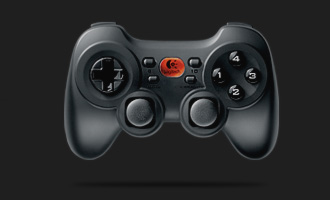
Logitech Cordless Rumblepad II - 2.4GHz USB


My gamepad of choice for my emulation-gaming ;P with:
  • rumble-function
  • frequency-jumping
  • 100 hours of battery capacity
This pad should outwin my current gamepad setup by a long-shot.

(My current setup being: 2 x "USB-to-PSone" 1m. adaptor-cables)


I've always liked Logitech's accessory product-line. I also have a laser laptop-mouse from them, with an undisputable response-time. Another reason for preferring Logitech accessories is because they use Human Interaction Device drivers (USB-HID), so they usually work flawlessly in Linux ;D

Logitech-link for Rumblepad II: http://www.logitech.com/


Update 13.04.2008:

2 x Rumblepad II are on their way! ^_^

09 March, 2008

More computer equipment.

CNet 54 Mbps 802.11g Wireless USB Dongle, for my desktop-computer@home.


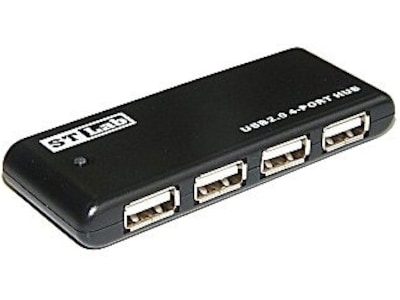
Sunsway ST Lab USB 2.0 Pocket Hub 4P (bus powered), for my PS3.

And at last, my sound will be digitally processed ;P

Creative SoundBlaster X-Fi Extreme Audio, is on the way!

CNet PCI 54 Mbps 802.11g Wireless (RaLink chip), for my Linux gateway!

And finally, CNet Directional Antenna 6dBi 2.4 Ghz RP-SMA connector, to get better range and coverage of the WLAN@home.