Showing posts with label Linux. Show all posts

03 April, 2022

Teletype / TTY

A teleprinter (teletypewriter, teletype or TTY) is an electromechanical device that can be used to send and receive typed messages through various communications channels, in both point-to-point and point-to-multipoint configurations.


Initially they were used in telegraphy, which developed in the late 1830s and 1840s as the first use of electrical engineering, though teleprinters were not used for telegraphy until 1887 at the earliest.

The machines were adapted to provide a user interface to early mainframe computers and minicomputers, sending typed data to the computer and printing the response. Some models could also be used to create punched tape for data storage (either from typed input or from data received from a remote source) and to read back such tape for local printing or transmission.

One such (deprecated in these days (2022)) computer-based teletype device, was the portable Minitel.
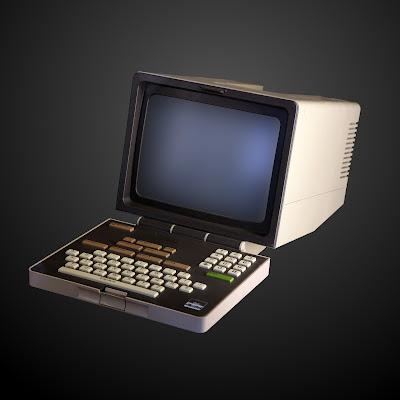

The Minitel was a videotex online service accessible through telephone lines, and was the world's most successful online service prior to the World Wide Web. It was invented in Cesson-Sévigné, near Rennes in Brittany, France.

The service was rolled out experimentally on 15 July 1980 in Saint-Malo, France, and from autumn 1980 in other areas, and introduced commercially throughout France in 1982 by the PTT (Postes, Télégraphes et Téléphones; divided since 1991 between France Télécom and La Poste).

From its early days, users could make online purchases, make train reservations, check stock prices, search the telephone directory, have a mail box, and chat in a similar way to what is now made possible by the World Wide Web (Internet).

In February 2009, France Télécom indicated the Minitel network still had 10 million monthly connections. France Télécom retired the service on 30 June 2012.

The service was purely PSTN-based (aka public switched telephone network / "plain old telephone system") and required a subscription land-line.

Recently I came over a Norwegian model on a Norwegian auction-site (finn.no), which would be the ideal complement to my next hobby-project: a PDP11/70 Unix mini-replica minicomputer. So I bought it.


This is the Alcatel Terminus 258. A Minitel2-clone made for the Norwegian telecom authority at the time (Televerket, branded on the keyboard-latch in the image above).


The specimen I have is the Unitel-version, meaning; it is not catered for the Minitel-service, but as a control terminal using either a PSTN (Public Switched Telephone Network) or a serial (DIN connector) uplink.


30 December, 2021

MAME / arcade-stick 🕹️ part 2


Time for some Q/A...


...and some game testing :P


27 December, 2021

MAME / arcade-stick 🕹️ part 1


Assembled the acrylic top + buttons + plastic bottom.


Attached joy-stick assembly to top.


Getting ready to wire up everything control-wise.

Wired up and attached to zero-delay USB controller-board.

29 August, 2020

29 August, 2019

Happy 28th! :D


Linux. Uploaded to public FTP, 28 years ago today.

22 October, 2018

Linux Presentation Day!

Although... we actually don't host Linux Presentation Day here in Norway, I'd like to make people aware of this event however possible. So to the few who actually reads this blog, you're welcome ;) :P

https://linux-presentation-day.org/

17 April, 2018

when PIGS FLY!!

"After 43 years, this is the first day that we are announcing, and will be distributing, a custom Linux kernel," Microsoft President Brad Smith said
http://www.businessinsider.com/microsoft-azure-sphere-is-powered-by-linux-2018-4?r=US&IR=T&IR=T

Yeah, well, OSS / Linux won...

05 January, 2018

Meltdown & Spectre --update--

Yeah, sometimes it does not warrant any extra security to be cutting edge... This I know.

That a hardware-vulnerability has gone unchecked for a couple of decades, however, eluded even me. Even more that it wasn't even addressed / announced before very recently.

Turns out, almost every computing-device I own has these bugs. And I find myself in a situation where I do as very many others do with vulnerable equipment, with little to no chance of patching; I just isolate them.

Don't get me wrong, I've taken measures and patched / disabled low-level functions as best I could. But when the issue is basically invisible (ring -3), there's limits to what I can do to fix it.

The ass-hats who made the shit have to fix it properly, or someone considerably smarter than me have to do what they can to mitigate as the circumstances will allow.

Which, from what I understand isn't much, and it's massively complicated to boot. The complications are the reasons for the "considerable performance slow-down" that will result from the software-fixes to the issue.


***UPDATE***

Seems these bugs / vulnerabilities have been blown totally out of proportion for the average computer-user.

Slowdowns only present themselves at huge workloads (think Big Data databases, enterprise computing, etc.), so average-Joe won't even notice any difference... I've been pretty buzy patching / fixing my affected systems lately, both at work and at home, and I can't say I've noticed any significant slowdowns in any way.

Not that I've got huge workloads, or global-spanning database-queries running 24/7, but I've definitely got bigger and heavier workloads than the average man.

--- If people just patch their systems regularly, they'll be fine ---


If you want to be sure you actually have the bugs, you can run this bash-script on Linux systems:
#!/usr/bin/env bash
echo "cpuinfo           : "$(cat /proc/cpuinfo | grep 'model name' | awk 'NR==1' | awk '{ print $4" "$5" "$6" "$7" "$8" "$9 }');
cat /proc/cpuinfo | grep -i bugs | head -1;


02 November, 2017

Desktop-Linux + CLI?

"If there's one thing surrounding Linux usage that bothers me more than anything else, it's when the detractors say you cannot work with Linux without knowing the command line. This is a bit of FUD — fear, uncertainty, and doubt — that keeps new users from giving the open source platform a try. I'm here, right now, to dispel that myth."
Ubuntu Desktop
Linux Mint (MATE edition)

With personal experience, I can attest to this statement. The days when you HAD to deal with the Command Line even on desktop-Linux distros are past. Only server-distros demand this nowadays.


https://www.techrepublic.com/article/yes-you-can-use-linux-without-knowing-the-command-line/

01 November, 2017

To my doubters

Yes, seems I finally landed my dream-job =D It's not work, it's fun :)

I get to work with innovating and bleeding-edge technology every day, at my own terms, with all the tech-benefits I could wish for. Not to mention my contract-benefits, and office-benefits (sponsored gourmet coffee, UV-filtered water and Red Bull).

"Red Bull-fridge"


Working with as smart people as I do is, well, very rewarding in itself. Finally, people at my own level! People who actually appreciates open-source and Linux!

To all my doubters and nay-sayers:
how's that Microsoft-programming job working out for you?

25 October, 2017

In 2017, Linux rules computing

 The Linux Foundation reports that Linux runs 90 percent of the public cloud workload, 82 percent of the world's smartphones, 62 percent of the embedded market, oh and a mere 99 percent of the supercomputer market. All that rests on the Linux kernel.

"The Linux kernel is one of the largest and most successful open-source projects that has ever come about. The huge rate of change and number of individual contributors show that it has a vibrant and active community, constantly causing the evolution of the kernel in response to number of different environments it is used in. This rate of change continues to increase, as does the number of developers and companies involved in the process; thus far, the development process has proved that it is able to scale up to higher speeds without trouble."

http://www.zdnet.com/article/whos-building-linux-in-2017/
 Good news :)

Over the past year, the kernel has been updated through merged changesets, new drivers, hardening and testing.

http://sdtimes.com/report-interest-linux-kernel-remains-strong/
http://www.zdnet.com/article/microsoft-says-40-percent-of-all-vms-in-azure-now-are-running-linux/

29 August, 2017

Happy Birthday Linux!

Happy Birthday Linux! Over a quarter (26yrs) of a century old, still going strong and conquering area after area in various technology-segments 😋😊😃

Yes, I know he didn't announce it on newsgroups this day, he did on August 25th.

But, as he says himself, he considers both dates as birthdays. The first as the announcement-date, and the second (today, August 29th) as the upload-date.

18 April, 2017

RetroPie

TIP: For those of you out there considering getting a NES Classic / SNES Classic read this blogpost first... you won't be sorry.

Since I started dabbling in Raspberry Pi SBC's, I've been testing a few emulation-distros and the like. Been playing around with this since June 2016, so a good 10 months by now I would say :P

One particular distro caught my interest while testing; namely RetroPie.
Excerpt from retropie.org.uk:

RetroPie allows you to turn your Raspberry Pi, ODroid C1/C2, or PC into a retro-gaming machine. It builds upon Raspbian, EmulationStation, RetroArch and many other projects to enable you to play your favourite Arcade, home-console, and classic PC games with the minimum set-up.

RetroPie lets you play virtually ALL arcade-/console-/PC-games released in the period 1980-2000. Every .rom I've got in my library (accumulated around 10.000+ since the 1990s) works out-of-the-box.


Tested a good few arcade- and console-roms, and they work flawlessly.


Only configuration it may require is a simple dialogue-based gamepad/joystick setup. And you're ready to game as you please :)

Zelda II - The Adventure of Link (NES)


Bubble Bobble (NES)

Super Mario Kart (SNES)


Super Mario World (SNES)


Super Bomber Man (SNES)


Super Street Fighter II (SNES)


Super Street Fighter II - In-game (SNES)


Turrican II (Amiga)

Turrican II - In-game (Amiga)


Giana Sisters (Amiga)

My Logitech F310 gamepad used testing RetroPie.

Street Fighter II (Arcade)

Street Fighter II - In-game (Arcade)

Sonic The Hedgehog (SEGA Genesis)

 Sonic The Hedgehog (SEGA Genesis)

Splatterhouse 2 (SEGA Genesis)

Splatterhouse 2 - In-game (SEGA Genesis)

06 April, 2017

HiFiBerry Digi+ Pro (for RPi)

Recently got a really nifty Pi-hat (addon-card for Raspberry Pi) called "HiFiBerry" - model "Digi+ Pro".


"Pi-hats" are simple single-PCB addon-cards that slot on top of Raspberry Pi line of single-board computers, and extends the functionality of the RPi's. The HiFiBerry slots easily on top of the GPIO pin-row, with the help of plastic risers (the white bolts/nuts pictured below).


With the HiFiBerry Digi+ Pro, I get audio-output in 24bit 96KHz "studio-quality". NiCE! :)


29 June, 2016

Nvidia graphics-accelerators

After being an AMD fanboy for a long time, I must admit Nvidia has the graphics market quite cornered.

My latest upgrade included an EVGA GeForce GTX 960 4GB GDDR5 SSC ACX2.0+

The one I had before that could barely grasp on the gaming-development cycle of it's time, yet alone the newer developments.

So, after a lot of researching and testing at friend's places, I concluded Nvidia has developed the superior gaming-tool(s). PhysX has no rival technologies (in PC hardware at least), as for the newer tech: HairWorks and GameWorks, I have no special opinions. They're there. Nuff said.

I'm rather more interested in the CUDA-cores and their hardware-accelerators, more specifically NVENC the hardware-accelerated HDV-encoder.

Not to mention all the recent "woo-haw" around VR.

15 March, 2016

quad-g5

Because of a recent lightning-strike, my gaming-rig literally spiked... and died...

But, thanks to very nice family-members I got replacement components, very quickly ;) :P since I was getting quite a few bucks in insurance (eventually, may'16) I decided to completely upgrade the whole rig.

After spending an afternoon researching (after months of contemplating on models and makes), I eventually landed on the following choices:

Component selection

  • Gigabyte Z170MX-Gaming 5 motherboard
  • 2 x 8GB Kingston HyperX Fury DDR4 2666MHz RAM-modules
  • Intel® Core i5 6600K 3.5GHz CPU
  • Intel® 535 SSD 240GB SATA 3.0 game-storage
  • EVGA GeForce GTX 960 4GB GDDR5 PhysX graphics-adapter
  • Cooler Master Hyper TX3 EVO CPU-cooler 
No fight to assemble the beast, at least not a lot. The CPU-cooler took some getting used to only having to screw together the mount(s), and pressing it into the motherboard (Cooler Master's *brilliant* Intel-type push-plugs -_-).

All components assembled into north+south-bridge(s)

It also helps to be prepared for a future lightning-strike, by using a 80-PLUS-Gold-certified PSU that sports: over-voltage protection, under-voltage protection, short circuit protection and over power protection.

Corsair RM850x PSU (Power Supply Unit)

Combined with a power-strip sporting surge protection, I'd say I'm much better equipped for the ominous scandinavian weather-system now, than before.

Giving a combined performance-boost of ~50% in heavy 3D and rendering cases :) and (roughly) around a 45-50% reduction in heavy-load temperatures as well as idle temperatures (Intel < AMD), I'd say I'm really pleased ;)


Quite the OP setup, at least compared to my earlier rig (h3x). Geekbench3-results confirm this:
  • quad-g5 geekbench3 multicore-score:
    13380 ('2016)
  • h3x geekbench3 multicore-score:
    8305 ('2013) 

*** FINGERS CROSSED ***


Update May 11th:

Added extra 92mm Cooler Master cpu-fan as exhaust-booster

29 February, 2016

Google Drive on Linux

Google Drive
I didn't really think much about it, but when I started using "InSync" a few years ago, all my woes using Google Drive on desktop-Linux vanished :)

It is simply the best client-side synchronization-tool for desktop use of Google's cloud-storage solution ("Drive") on Linux today. Both simple and quite configurable at the same time.

It is cross-platform compatible, i.e.: works on Windows, Mac OS X and Linux!

Only drawback is that it costs a one-off fee of $20, but after that, you can use it on as many machines as you want :P

It basically works just like Dropbox (which actually has a Linux-native client! Boo Google!), allowing the user to maintain his file system and offering share options as well as other features by right clicking on files and widgets.

You can get InSync here: https://www.insynchq.com/downloads