
In the end, your family is all that matters. Take time to appreciate what you have, when you have it :) looking forward to thanksgiving @mom's house ;D
25 November, 2012


20 November, 2012
A random screenshot

This is a normal, everyday looking screen for me.
Yes, I spend a lot of time on the CLI ;) both local and remote :P
08 September, 2012
Valve - Steam > Linux

I had bought "Counter-Strike" (the original) a few years ago. Though it was the CD-ROM release copy, it included a booklet on activating the product on Steam.
I'm SO glad I actually did, because I can no longer find the original CD-ROM, nor can I find the DVD-ROM for Half-Life 2 / Counter-Strike: Source. But that didn't matter :) Steam had all the games, already activated and ready to download and install :P Woohoo!
If they are successfull at porting the client to Linux, and consequently; games. They will definitely have opened a whole new market-target for online game distribution ;)
Way to go Valve! ;D
Coincidentally, Valve recently published a press-release claiming Linux as the new de-facto open (gaming) platform. Beating both Windows and Mac OS X on the "technicalities" ;P
Linux, being an openly developed platform, gives game-developers a technical road-map of the OS' inner workings, it's limitations and structure details that give an immensely comprehensive base for advanced game programming.
Personally, I don't think they've even tapped the tip of what is possible with a Linux-system when it comes to serious gaming. I see promising development if this takes off, as we all hope it does :)
PC Games N:
http://www.pcgamesn.com/article/valve-linux-better-windows-8-gaming
Norwegian e-zine:
http://www.idg.no/computerworld/article259040.ece
http://www.idg.no/computerworld/article259040.ece
02 August, 2012
Stallman, on Steam? :o

Forkjemper og leder for fri programvare (FSF), Richard M. Stallman, innrømmer at Steam-plattformen vil være positivt (og fra Stallmans synspunkt, også veldig negativt) for Linux.
Spillselskapet Valve vil nå (etter mye frem-og-tilbake) slippe "Steam Client" for Linux (online rammevek for leveranse av PC-spill), og etterhvert også portere populære spill-titler til Linux uten bruk av masse kompatibilitetslag (les: wine, DirectX, osv.).
I denne anledning ble Richard M. Stallman spurt om tankene rundt dette. Svaret ble ganske overraskende, spesielt fordi han er mest kjent for sine ekstreme meninger om proprietær programvare (Windows, Mac OS X, o.l.), bruker-rettigheter og personlig frihet (med ekstra god trykk på "personlig frihet"). Men han medgir nå altså at selv om spill er proprietære, kan de virke som et lokkemiddel for Linux-plattformen, som i seg selv kan resultere i at flere åpner opp øynene for FOSS (Free and Open Source Software) og kanskje er mer bevisste over hvilke faktiske friheter de besitter ved å benytte forskjellige typer programvare og operativsystemer.
"I suppose that availability of popular nonfree programs on GNU/Linux can boost adoption of the system. However, our goal goes beyond making this system a “success”; its purpose is to bring freedom to the users. Thus, the question is how this development affects users' freedom."
--Richard M. Stallman, 2012
"Thus, in direct practical terms, this development can do both harm and good. It might encourage GNU/Linux users to install these games, and it might encourage users of the games to replace Windows with GNU/Linux. My guess is that the direct good effect will be bigger than the direct harm. But there is also an indirect effect: what does the use of these games teach people in our community?"
--Richard M. Stallman, 2012
Nåja, forventer ikke litt vel mye her da Richie? Jaja, man vet jo aldri... :)
Link til artikkel:
Richard M. Stallman - Steam is good for GNU/Linux
Link til Computerworld-artikkel:
http://www.idg.no/computerworld/article250349.ece
Link til FSF-artikkel:
http://www.gnu.org/philosophy/nonfree-games.html
14 June, 2012
VMware ESXi 5.0 upd1
I haven't been that consistent about posting on this blog lately. But here's a little re-cap of my computing escapades for the last months:
I've updated my WD 4GB USB dongle with VMware ESXi 5.0 update1 hypervisor. Yes, I've set out into the virtualization cloud ;) running through 1.8TB X-RAID array via iSCSI.
I have also upgraded the graphics-setup in "h3x", it now sports a brand-spanking-new Nvidia GeForce GT520 Silent. Testing out this card blew me away :D then again, last time I invested money in a decent gfx-setup was back in the AGP-days :p PCIe 2.0 x16 definitely kicks ass!
I had to add certain PPA-repositories (apt-get repos) to get a driver that would work in Linux Mint 13, but it was no hastle, and it worked like a charm :)
09 May, 2012
Samsung Galaxy Nexus

It has a sturdy build with high-quality plastic, and the battery-cover is cleverly fitted into the phone-chassis.
The OS (currently updated Android v4.0.2 "ICS") differs quite a lot from v2.x (which I used before). All of the UI-interaction is now done completely via touch / multi-touch (which Google had envisioned when they started development on Android).
I especially love how you can drag-n-drop shortcuts on top of each other in the new launcher to form popup folders. One of several new, interesting and innovative UI functions. Another is the ability to take a screenshot of the device-display (pressing Power+Volume down buttons simultaneously).
I've been using Android full-time since the early v1.x-days, and personally I love the new UI guidelines, drop-down menus and generally, Android v4.x all-in-all :)
Google has done a magnificent good job in rolling v2.x (mobile-version) and v3.x (tablet-version) into one monolithic source-code tree, capable of making both binary-versions.
Keep up the good job guys! :D
24 April, 2012
NAS for iSCSI/media/files
1.8TB SATA3 in RAID-1 configuration.
I have now switched my ReadyNAS Duo v2 with a ReadyNAS Ultra 2 Plus, which is the business-edition of Netgear's 2-bay NAS boxes. Way better equipped for my needs.
Hardware:
- Intel Atom dual-core 1.5GHz (x86 instead of arm5 as in Duo v2)
- Dual Gigabit RJ-45 LAN ports
- 2 x USB 3.0 on back-panel (one over each gigabit LAN port)
- 1 x USB 3.0 on front-cover (for "backup"-button)
- 2 x Western Digital Caviar "Green" 2TB SATA3 hard-drives
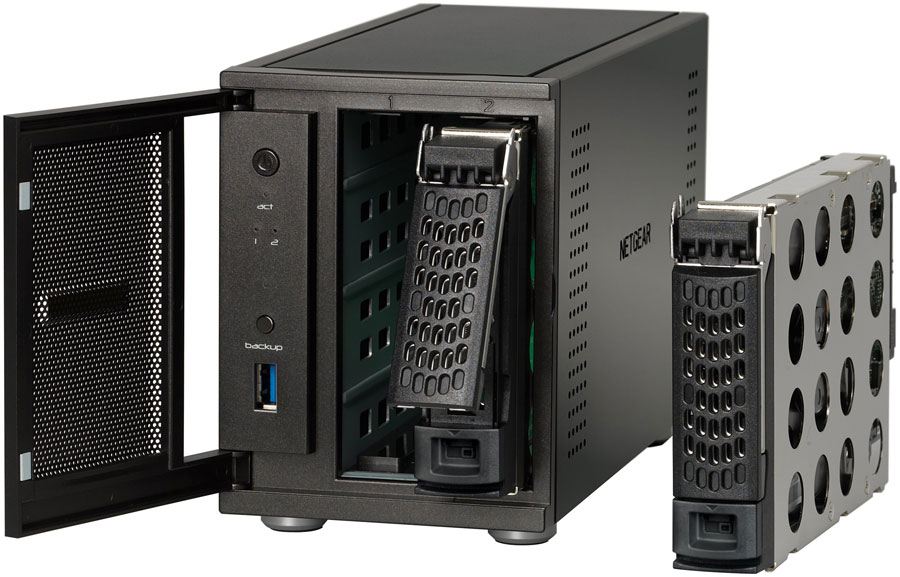
What really makes it stand out is its ability to share iSCSI targets. Basically, it can share portions of its RAID-array as virtual hard-drives for Virtual Machines run either by for example VMware or VirtualBox on a server, or via a bare-metal hypervisor (ex.VMware ESXi, my personal favorite ;).
Extra functions in the Ultra 2 Plus compared to Duo v2, are for example the possibility for scheduled RAID-scrubbing and/or volume checking, to keep your RAID volumes clean and fixed :)
09 December, 2011
h3x4c0m
OK. Computer-building has always been a hobby of mine. Later years have shown that high-end components don't always have to cost an arm and a leg. So I figured I'd do a build-project where I would build a hybrid workstation / VM-lab / gaming-rig, with as much computing-power as my limited budget would allow.

The following became my project-goals:
- Build an HTPC (Home Theatre PC) with std.-dimensions for rack/stack placement.
- Get the most powerful and technically up-to-date cpu for as little as possible, most likely an alternative to Intel (AMD).
- Shove in, at a very minimum, at least 8GB of RAM with decent heat spreading.
- Make due with the stock cpu-fan and add cabinet fans accordingly.
- Use a customizable O.C.(overclocking)-motherboard for tweaking-purposes.

The basic assembly was quite easy. Every screw and spacer needed was included with the cabinet to ensure a good fit for the MicroATX motherboard.


 |
| System-disk. Period ;) |

I could fit up to 3 hard-drives total, but I only used a 250GB Western Digital hard-drive for personal files (/home Linux partition) and a 60GB ForceGT Corsair SSD for the OS (Linux). The SSD was a definite improvement both on heavy word-load effectiveness and boot-up (it boots Debian GNU/Linux / Ubuntu Desktop / Linux Mint in less than a few seconds!)
 |
| A metal bar is used to keep the cabinet sturdy, and does an excellent job. |

This couldn't be! 800MHz x 6!? At first I figured it was the Cool'n'Quiet-feature of AMDs processor-lines that throttled everything down to save power and/or cool the cpu. This was not the case.
As I read the motherboard webpage, I realized the cpu was released after the motherboard. And even though it listed the cpu as compatible, it also said it required an EFI-update to be able to take full advantage of a hexa-core processor.
Well, that figures... So, I aggravatingly downloaded the mentioned EFI binary-blob on a USB-stick, and proceeded to flash the motherboard.
After booting up the newly upgraded firmware, it listed the cpu with the correct specifications :) YAY-HOORAY! ;D
 |
| Without discrete graphics card. |
  |
| With discrete graphics-card. * Asus GeForce GT520 2GB 64-bit GDDR3 PCie-2. |
I haven't really had the time to properly benchmark the performance yet. And I think I'll postpone it until I have a proper cpu cooling-system (preferably liquid-cooling, but I haven't been able to find a low-profile cooling-system that will fit the SilverStone Milo HTPC-cabinet yet).
For now, it has shown exceptional potential as a file-/web-server, daily mailer/browser, HD multimedia powerhouse and compilation workstation :] so I'm really looking forward to pushing it to the edge :D


Next project is setting up an advanced NAS box, preferrably with iSCSI-support for Virtual Machine network-storage :]
NAS-project update: http://blog.pizslacker.org/2012/02/nas-for-vmwaremediafiles.html
Discrete graphics upgrade (Sep'2014):
 |
| New (as of Sept'2014) Sapphire Radeon HD 6670 1GB 64-bit GDDR5 PCIe-2.1 discrete graphics-card + Supplementary (for separate iSCSI-subnet) MiniPCIe Gigabit Ethernet card |

 |
| With new Sapphire Radeon HD 6670 1GB 64-bit GDDR5 PCIe-2.1 discrete graphics-card. |

19 October, 2011
R.I.P. Dennis M. Ritchie
The father of the C programming language and co-creator of the Unix® operating system died last week at the age of 70.
A TRUE computer pioneer, and one of the last TRUE old-school hackers.
Without Dennis, we would not have the direct and spiritual descendants based on his innovations, including: Linux, Android, Mac OS, iOS, JavaScript, C++, the genius of the Internet and a world full of computer programmers and developers.
Devs of the world owe you mr Ritchie.
Thank you for bringing the concept of "Open Systems" to the world. Without it, I would undoubtly be locked-in with a major proprietary software vendor.
Instead, I am free to use whatever I want, in any way I want, on any device I want. Thanks to open systems, open protocols, open projects and open source :)
Many thanks for your contributions Mr. Richie, forever grateful.
25 August, 2011
Happy 20th, Linux! ;D
Yes, the monolithic, POSIX-compliant operating system kernel is celebrating it's 20th anniversary today :) YAY-HOORAY!
23 August, 2011
Oracle VM VirtualBox

But I'm quite pleased about my new server-VM setup @ home :D
On my Ubuntu desktop @ home, I now mainly use Virtualbox OSE (Open-Source Edition). Simple, yet powerful and quite configurable ;D
Virtualbox was easy enough to set up, and installing Ubuntu Server on a virtual machine was fun :p taking snapshots as I went along configuring and restoring web-files and what-not. I'm really content with it :) I think it emulates very well with limited resources.
Although Oracle bought Sun Microsystems Inc., it's open-source products haven't shown any slow-downs in their progress and development, except for OpenOffice that is... But the LibreOffice project saved it from corrupting it's relationship with it's open-source community.
02 July, 2011
Monster PC build-time ;D

Okay, so my cousin's boyfriend bought some killer-components in the United States. He then asked me if I was interested in helping him order the remaining components to build a performance-powerhouse extraordinaire :p of course my inner g33k couldn't refuse.

He had purchased the following components so far:
- Intel i7 2600K cpu
- 4 x 4GB Corsair Vengeance DDR3 DIMMs
- MSi P67A BD80 G3 Military Grade II Mainboard
I'm going to post further development of this monstrosity :p and I'm definitely going to record the first boot-up when the time comes, and post that here as well :) you can follow this post-thread with the label "monster-dualboot"

23 June, 2011
WebGL VS. Silverlight

Nå må dere seriøst skjerpe dere Microsoft XD og kanskje få litt bedre orden i egen teknologi før dere kritiserer alle andres til egen fordel :p i alle fall når fordelen ikke egentlig eksisterer.
MS kritiserte sårbarheter i WebGL (Google sin web3D-satsing sammen med mange andre store IT-aktører på alternativ-markedet) for ikke så lenge siden, når det faktisk viser seg at deres egen teknologi har like kritiske (om ikke mer) sårbarheter (*lulz!*).
Jeg har ikke stort mye mot MS lenger, har rett og slett flamet nok om "M$" det siste tiåret. Men når de fortsetter med FUD og lekesandkasse-mentalitet, og allikevel påstår å være en seriøs aktør er det nok mer enn bare meg som rynker på nesen...
http://www.digi.no/872442/silverlight-har-samme-saarbarhet-som-webgl
18 May, 2011
downtime ...
www.pizslacker.org will be down for a few days due to software-upgrades.
www.pizslacker.org is once again fully operational ;)
30 April, 2011

07 April, 2011
--// Samsung Nexus S \\--

As a collaboration between Samsung and Google, it's the next-step innovation in smart-phone technology.
My first Android-phone was the developer-phone HTC Magic ( non-Google branded B-revision ). It was a barebones Android-system without any major UI additions like HTCs newer Desire-models (Sense UI).
From what I can gather, Nexus S is like the previous Nexus phone with updated components and firmware. Pretty much an updated developer-phone for Google's latest Android-platform: v2.3 "Gingerbread".
With an up-2-date CPU of 1GHz, codenamed "Hummingbird" ( ARM Cortex A8 ), the Nexus S is multitask-capable. Making it the most powerful Android-phone at the moment. The ARM Cortex A8 chip includes a co-processor: the PowerVR SGX 450 GPU for OpenGL ES 1.1/2.0 for enhanced 2D/3D mobile graphics and animation.
As a superuser, my previous phones have all lacked enough memory-capacity for my userload. The Magic had 192MB of userland-accessible memory, my current Desire-phone has 150MB userland-accessible memory.
Both Magic and Desire has expandable storage by using a microSD memory card slot. Magic can handle cards of up to 16GB capacity and Desire can handle up to 32GB capacity. The only problem with external memory storage is read/write-times while using externally stored applications, which at times would entail a lot of loading-time when using data-heavy applications. Instead of just boosting and mostly utilizing the userland-accessible memory that is incorporated into the chipset.
With the Nexus S they have eliminated these problems as the userland-accessible memory is a 15GB iNAND-partition :D It really doesn't bother me that the memory is iNAND and that it doesn't sport a microSD slot, in my experience, phones and memory cards don't always work all that well together ( mostly because microSD cards doesn't handle rapid mounting/unmounting good at all in my experience ).
I'm looking forward to getting my new smart-phone, and can't wait to play with new features and functions :p
Addition, april 23rd:
I have now been tinkering with the Samsung Nexus S for a few days, and I am one happy techie :)
It is excactly like I imagined it to be by reading the published specs online. Allthough the user-land accessible memory-partition wasn't 15GB, it was more like 14GB. And with one 1GB user-land accessible system-partition to support the restricted 1GB nternal Android-system.
512MB of dedicated Mobile DDR with the PowerVR gpu really boosted the animation speed and look. Even the startup-logo is pure eye-candy :p Google-logo fading into a Nexus "X" symbol animated with colored spiral-lines, niiice! :)
I can even store all the games I've bought from Android-market without worrying about slowing the device down like I had to with the Desire. All apps are installed, all my games, utilities, etc. And I haven't even used one gigabyte completely yet :D
Yay! Woohoo! Awesomesauce! ^_^
23 February, 2011
PS3 YLOD
Not to bash Sony in any way. Or to criticize too much either.., I love their work and innovation :)
That being said: I didn't buy the first PlayStation3 revision, thankfully. A lot of friends bought both the first, and second revisions which both had their fair share of hardware and software issues.
The third one, you would have thought would be fairly stable and sufficient. And it was, after mediocre use over 4 years. But just at the end of the fourth year, mine had started making annoying noises from the BD-drivebay. At this point, the warranty was void. And after a month or two, the fan ran on constant maximum. Then, the horror. I got up one morning and pushed the power-button, it started up as usual, flashed an YLOD, shut off and blinked red. FML...
I am now a proud (yet, distraught) owner of a fourth generation PlayStation3 Slim. Yes, it is a little less powerfull than the "phat", but generally quite noiseless. I also bought a PS3 Slim horizontal cooler stand to pre-empt another YLOD incident.
I also do regular backups because of Sony's updated firmware that doesn't let you swap disks from one system revision to the other ( which worked fine on the third gen ).
I bet it will bring me hours of HD film and gaming joy. But I must admit Sony has done theirs to make it quite an awfully expensive hobby. And I'm not sure I will continue to endorse Sony if this continues to get worse in the time coming :/
That being said: I didn't buy the first PlayStation3 revision, thankfully. A lot of friends bought both the first, and second revisions which both had their fair share of hardware and software issues.
The third one, you would have thought would be fairly stable and sufficient. And it was, after mediocre use over 4 years. But just at the end of the fourth year, mine had started making annoying noises from the BD-drivebay. At this point, the warranty was void. And after a month or two, the fan ran on constant maximum. Then, the horror. I got up one morning and pushed the power-button, it started up as usual, flashed an YLOD, shut off and blinked red. FML...
I am now a proud (yet, distraught) owner of a fourth generation PlayStation3 Slim. Yes, it is a little less powerfull than the "phat", but generally quite noiseless. I also bought a PS3 Slim horizontal cooler stand to pre-empt another YLOD incident.
I also do regular backups because of Sony's updated firmware that doesn't let you swap disks from one system revision to the other ( which worked fine on the third gen ).
I bet it will bring me hours of HD film and gaming joy. But I must admit Sony has done theirs to make it quite an awfully expensive hobby. And I'm not sure I will continue to endorse Sony if this continues to get worse in the time coming :/
02 February, 2011
DENON A/V Receiver - HDMI 1.3a

Valget falt raskt på Denon da en kamerat sa det var tilbud på low-end receiveren deres AVR-1610 i fjor. Forsterkeren er ikke en disco-brøler, leverer dog klar og konsis lyd, men jeg må innrømme at det var funksjonene som lokket meg til modellen.
AVR-1610 er definitivt budsjett-varianten av mer high-end hjemmekinosystemer laget av Denon. Men den skiller seg nokså klart fra andre receivere i samme prisklasse på de tekniske og funksjonsmessige finessene.
- Data-styrt lydrom-korreksjon (lyd-funksjonen "Audyssey" med medfølgende mikrofon i opptil 6 måleposisjoner) som virkelig er bra utarbeidet. Det krevde litt tålmodighet å kjøre lydtest på 6 posisjoner fra alle høyttalere, men det høres i ettertid. Klang, tone og bass kjører mye bedre sammen i valgt rom enn med fabrikk-innstillingene.
- Full støtte for HD lyd (DTS HD Master Audio + Dolby TrueHD).
- Oppdatert Dolby Pro-Logic IIz surround for oppmiksing av stereo-kilder.
- Oppskalering av analog video / SD til HDMI High-Def.
- On-Screen-Display for HDMI-styring.
- Et lass med RCA-tilkobling for analoge lydkilder (DVD, DVR, TV, CD, osv.)
- 3 x HDMI 1.3a porter + switch + 1 HDMI 1.3a repeater, 2 x S/PDIF Opt., 1 x S/PDIF Coax.
- D/A 24bit 96KHz - A/D 24bit 192KHz.
- Mulighet for original iPod-tilkobling med fjernstyring.
- Intelligent strømfordeling for alle høyttalertilkoblinger.
 M.a.o. får du utrolig mye teknologi og datastyrt lyd-korreksjon for pengene. For ikke å snakke om alle digitale tilkoblinger en trenger for minst mulig støy-, ulyd-forstyrrelser på lydsignaler.
Trenger man mer kraft for å drive høyttaler-settene en har, trenger man ikke bytte ut forsterkeren, bare integrere et kraftig slutt-trinn, så kan Denon-receiveren benyttes som styrings-receiver.
Jeg har nå benyttet AVR-1610 siden Mai 2010, og er i alle fall MER enn godt nok fornøyd :) 9.5/10 poeng!
Link til produkt-side hos produsent:
http://denon.co.uk/uk/Product/Pages/Product-Detail.aspx?Catid=83742842-dc75-4090-b169-b916700fd158&SubId=43eadffa-05fc-430a-a586-b5137428cc5f&ProductId=d1116d48-4581-466c-82e9-86d0028e1079
23 November, 2010
CERN i Norge

Regjeringen viser støtte til forslaget om eget CERN-senter i Norge. Fornyingsminister Rigmor Aasrud innser at vi trenger konkurransedyktig IKT-struktur i landet, og egentlig er ganske ledende på mange områder innen, nettopp IKT.
CERN anmodet i juli i år sine medlemmer å uttrykke sin interesse om å være vertsland for lokaliserte datasentre, og dette har nå fått offentlig støtte her til lands. Regjeringen skal nå uttrykke sin positive holdning til norske aktørers tilbud gjennom et brev til CERNs ledelse, og Rigmor Aasrud vil i slutten av måneden reise til Genève for å fremme denne støtten og Norges evne til å være vertsland.
På tide at vi i nord blir internasjonale aktører på dette området og i dette omfanget etter min mening :)
Go Norge! ;D
Link til Computerworld-artikkel:
http://www.idg.no/computerworld/article185717.ece
27 October, 2010
Ubuntu med eget brukergrensesnitt
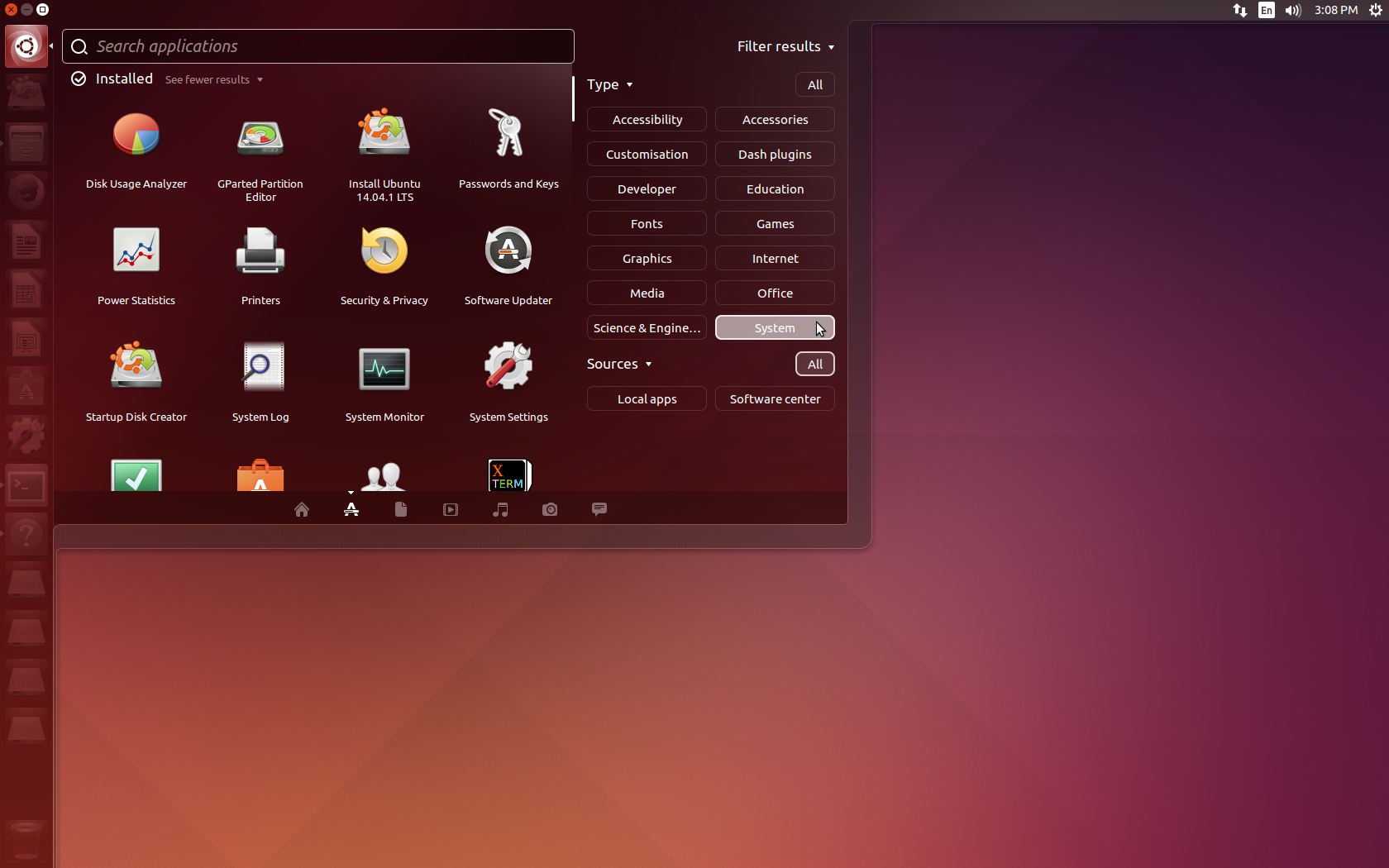 |
| "Unity" |
Det skrives også at åpen kildekode fellesskapet ytrer misnøye mot Canonicals valg om å ikke utgi kildekode for alle deres bidrag, noe jeg kan forstå. Det er aldeles ikke lett å være ledende på noe som benytter proprietære og åpne løsninger om en annen, for så å gi vekk alle oppskriftene på egne løsninger.
Som jeg har blogget tidligere, så synes jeg at proprietær og åpen teknologi godt kan eksistere side om side. Når dette er en distribusjon som retter seg mot "alle" må det ofres ting og tang for at det skal lønne seg å utvikle produktet i det hele tatt. Men nå avsporer jeg litt, skal ikke gå videre inn på etikk, lisenser og lignende i dette innlegget. For å si det på en enkel måte: stå på Canonical! ;)
Digi.no artikkel:
http://www.digi.no/854570/ubuntu-satser-paa-eget-brukergrensesnitt
24 October, 2010
Tales from a Windows-free life
I completely stopped using Windows around 2002, and I've really enjoyed it, very, very much :)
Since then I've been distro-hopping (swapping different Linux-versions, more commonly known as "distributions", or "distros") through everything from Slackware Linux to Ubuntu. It's been a rocky and unstable ride to be quite honest, but it's been an awesome learning-experience.
I can't even begin to count all the problems concerning re-installation of Windows on both my hands. Yes, that's BOTH hands! I really, REALLY hate re-installing Windows. And if you're a super-user like me, who likes to play around with your computer-systems, you've done a re-install a couple of dozen times (or maybe even more).
Doing a windows-update after a fresh installation can take HOURS... Suffice to say it's a tedious and boooooooring task. Yes, I can hear a comment in the distance saying "why not use an up-to-date installation disc with all the Service Packs included?", well, the problem with that option is this: Windows AIN'T FREE. But that is not the only reason why I've renounced Microsoft-products alltogether. License this and license that, non-disclosure agreements and what-not. I'm sick and tired of it. Not to mention the installation-hell it is to install Windows onto a laptop, or (God forbid) a NETBOOK! After doing tenfolds of re-installations in the 90s and the early 2000s, my conclusion for personal operating system and software-usage came to this: No More Windows For Me!
I'm not giving Windows or Microsoft the finger. I've used their software for quite some time earlier in my computing-life. Even as far back as DOS and Windows 3.11. I'm just saying it's not for me anymore. I need more options and alternatives to doing computing tasks, I don't like being locked-in to one, and ONLY one solution.
Doing a fresh Linux installation, can take MINUTES, at most an hour or two. And if you're nice about it and don't include a shitload of third-party addons, you're likely to only do this ONCE! One time, and only doing updates and release-upgrades every now and then afterwards. Ok, so installing operating systems is not for everyone. But you can always ask a nice geek/nerd-friend to do this for you. Doing updates and upgrades nowadays is rather straightforward. The system asks if you want to update/upgrade, you press "Yes", you type in your password; and HEY PRESTO! It's over and done with.
I admit, being experimental with a Linux-system can do irrepearable damage, but hey, that's how we learn. And it pays off to use a system you can sacrifice for such a project. I did, multiple times. That's why it's called "experimental".
After doing all my experimenting on Linux and figuring out how it works, I decided to use a mainstream-distro to save me from headaches when trying to get things working. That's why the choice fell on Ubuntu.
After switching to Ubuntu in early 2009 (from Slackware Linux, which I still like), I've never looked back. Ubuntu serves my every computing need. It includes almost every public proprietary technology, from Flash to Java. Allthough it has to be added manually, doing so is not hard. It is explained in great detail all over the web, you just have to look for it. And, Ubuntu offers alternative programs to just about every web-service available today. Another great point for pro-linux, is that it runs on just about any hardware available as well. Can you say the same for Vista? Or Windows 7? I think not...
Nuff said ;)
19 October, 2010
"Linux er død (igjen)" - Eller?

Jaja, skal si meg enig i at Linux på skrivebordet kanskje aldri når frem til mannen i gata. Men ikke fordi det ikke er mulig, vanskeligere, eller utilgjengelig. Ingen av disse utsagnene stemmer i det hele tatt.
Det hele dreier seg mer om uvitenhet enn noe annet. Og det at folk er "vant" med det de er vant til (les: Windows / Mac OS X).
Tankegangen blant gjennomsnittet er at programvare laget av store programvare-selskaper som selger dette, er "bedre" enn gratis programvare. Dette stemmer ikke alltid heller.
Skjønt fri programvare kanskje ikke har de samme funksjonene som betalt programvare, betyr det ikke nødvendigvis at de ikke kan gjøre akkurat den samme jobben (gjerne bedre i mange tilfeller), men at de utføres på alternative måter (dette fordi proprietær programvare ofte har lisenser og patenter krøllet inn i oppskriftene for å beskytte opphavsretten, men det har også visse frie prosjekter, deriblant Linux kjernen).
Jeg er nokså enig i det mange sier om at Linux er for avanserte brukere, eller såkalte "super-brukere", jeg er selv en super-bruker. Og når man besitter denne kompetansen, krever man gjerne litt mer av programvaren man bruker. Jeg gikk personlig over til fri programvare og Linux fordi jeg var drittlei av å være begrenset i hvordan jeg kunne benytte programvare, forandre den og dele den videre.
Jeg er nokså enig i Richard M. Stallmans (grunnleggeren av GNU og FSF) ideologi om at all innovasjon og oppskriftene på dette skal kunne deles, og at alle skal ha de samme rettighetene på det samme grunnlaget. Men at alt skal være gratis uten unntak, er å gå for langt. Det er nok av plass for begge typer programvare i vår verden.
Link til ITAvisen.no:
http://www.itavisen.no/853888/linux-er-dod-(igjen)
03 October, 2010
Pure fiber-fun!
I love using Linux this day and age :) I remember back in the DOS/Windows-days when you needed a specific program, but you wouldn't necessarily buy the program because you'd only use it once, then shelf it. So.., you'd BORROW software instead. Which was fine, back in the glory-days... Nowadays, everyone's crying "license this!" and "license that!".
If you wanted to upgrade any software, or even the OS itself.., you'd have to pre-order it and wait.
Today, there's no waiting, and no "postage pre-ordering". You pretty much just connect to a download-server and download whatever you're looking for. Either paid, or for free (I tend to favor the latter, even though I donate to various open-source projects).
If I want a specific program to do a specific job, the procedure is as follows:
- Read up on OSS projects focusing on my desired application-type.
- Figure out which one is the most stable by reading user-feedback.
- See if my OS has a version of the app I want in it's repositories.
- Download the app via my OS' package management system.
- Use the app for whatever, whenever ;D
For example, downloading 3,3MBs of application-data/-binaries on a 30mbps fiber-connection took me about 1 second:
Need to get 3,386kB of archives. After unpacking 14.2MB will be used.
Fetched 3,386kB in 1s (2,122kB/s)
At which the computer is only using a fraction of the capability available, I just love it! Just thinking about the times I spent on the family-computer in my younger days, downloading linux source-packages through either a radio-connection (400/100) or an ADSL-connection (1000/600), makes me shudder and laugh XD
Welcome 30000/30000 FTTH! ;D
01 October, 2010
WebM og WebP
Nytt videoformat (WebM) og bildeformat (WebP) for web, noen av idéene til Google for å gjøre webben raskere og smidigere. Med de nye formatene og nettleseren deres Chrome (Chromium på Linux) som også er utviklet for å være rask og sikker, skal Google innlede fremtidens Internett, i dag.
Dette har lenge vært det store målet med innovasjonen og videreutviklingen de siste årene. Både med protokoller, programmeringsspråk, mobil-plattform, video-/bildeformat, dynamiske web-tjenester (Google Calendar, GMail, Google Documents, etc.), osv.
- WebM

- er et såkalt video-container filformat. Som i grunnen betyr at det er en innholdsfil (se for dere en boks med video og lyd-filer inni og innholdsregister) med tilhørende video- / lyd-strøm(mer). Containeren er basert på en profil av Matroska video-containeren. Formatet er laget for å være et royalty-free åpent video kompresjons-format. Audio / video benytter V8 (video) og Vorbis (lyd) video/lyd-kodeker.
- er et såkalt video-container filformat. Som i grunnen betyr at det er en innholdsfil (se for dere en boks med video og lyd-filer inni og innholdsregister) med tilhørende video- / lyd-strøm(mer). Containeren er basert på en profil av Matroska video-containeren. Formatet er laget for å være et royalty-free åpent video kompresjons-format. Audio / video benytter V8 (video) og Vorbis (lyd) video/lyd-kodeker.

- WebP
- er et bildeformat designet for rask lasting fra web. Basert på Google's V8 kodek, benytter det intra frame coding, med container-filformat basert på RIFF.
Digi.no artikkel:
http://www.digi.no/852639/vil-erstatte-jpeg-paa-weben
30 September, 2010
PlayStation® 15 år!
Ja, da kom jeg plutselig på at det var meningen å blogge om 15 års jubileumet til PlayStation®. Sinnsykt at det allerede har gått 15 hele år :| føler ikke at det var så lenge siden jeg satt i stuen hos søskenbarnet mitt å spilte det første RayMan-spillet(!) :p Og ja, det er en modchip bak på maskinen på bildet (hadde problemer med å laste opp bildet på Picasa, så derfor mangler nederste del). Det er min trofaste første PlayStation, som har gledet i mange, mange år (som faktisk fremdeles virker utrolig nok etter all mishandlingen den har gjennomgått).
 Min PlayStation 2 :)
 Og min PlayStation 3 med fluoriserende docking / usb-hub ;D
Les mer på PlayStation.com.
Subscribe to:
Posts
(
Atom
)

 Posts
Posts



