Showing posts with label Internet. Show all posts

07 February, 2015

Best desktop gigabit switch


The Netgear GS108 has been a rock-solid, 24/7, always-on, seriously dependable Internet switch-point for office / desktop use.

I have been using one as an internal gigabit switch-point between gigabit LANs and a FTTH fiber-gateway for 5+ years now. Not one outage!

It is, however, a dumb switch. Meaning: it is not a managed smart-switch, but rather more of a "stupid" repeater-block. But an extraordinary one at that :)

29 December, 2014

Open networking; leaf-spine...

I recently came across a norwegian tech-article regarding open networking vs proprietary networking.

More specifically, it talks about the Open Compute Project - for those of you who don't know, read this. More information can be found here.

The project discusses the use of open standards when building huge, energy-demanding and efficient data-centers. Basically, OCP talks about replacing the common standard networking architecture with something (kind of) new, to meet the ever evolving (and consequently; demanding) bandwidth and streaming of tomorrows data-centers. Mainly, replacing the tree-span network-design with the leaf-spine network-design.

A leaf-spine network design consists of the following:

  • Top-of-rack (leaf) switches (leading to spine-switches).
  • Spine-switches (between leaf- and core-layers in a leaf-spine network).
  • ... and other hardware and software solutions for rack-use.
LEAF-SPINE NETWORK
In a so-called "leaf-spine" layer-2 network; the spanning-tree protocol is often replaced with either a version of Transparent Interconnection of Lots of Links ("TILL") or Shortest Path Bridging ("SPB").

In a leaf-spine layer-3 network; each link is a routed link. Open Shortest Path First ("OSPF") is often used as the routing-protocol to compute paths between leaf and spine switches.

The norwegian in me thinks the reporter has (way too) big expectations, especially if he's counting on norwegian authorities and heavy industry for this (quite HUGE) change to take place.

But on the other hand, my inner sysadmin really likes the possibility of administrating a data-center with fully open networking-protocols / -equipment and/or -hardware :)


My own little µ-datacenter is based on open protocols, open systems, and somewhat open hardware.
http://blog.pizslacker.org/2014/10/datacenter-so-far.html

Norwegian article:
http://www.cw.no/artikkel/kommentar/apent-ikke-proprietaert


24 April, 2012

NAS for iSCSI/media/files

1.8TB SATA3 in RAID-1 configuration.

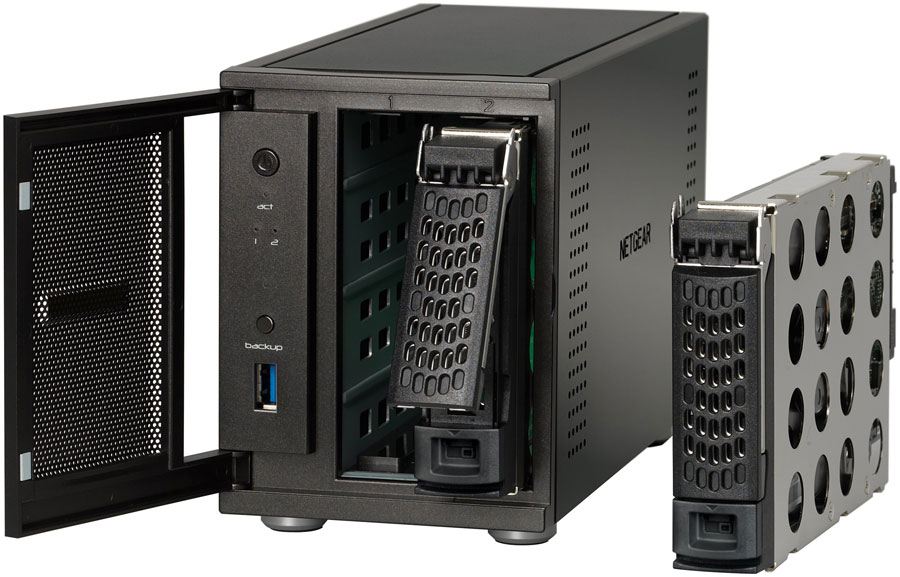
I have now switched my ReadyNAS Duo v2 with a ReadyNAS Ultra 2 Plus, which is the business-edition of Netgear's 2-bay NAS boxes. Way better equipped for my needs.

Hardware:

  • Intel Atom dual-core 1.5GHz (x86 instead of arm5 as in Duo v2)
  • Dual Gigabit RJ-45 LAN ports
  • 2 x USB 3.0 on back-panel (one over each gigabit LAN port)
  • 1 x USB 3.0 on front-cover (for "backup"-button)
Accessories:
  • 2 x Western Digital Caviar "Green" 2TB SATA3 hard-drives

The Ultra 2 Plus business-ready revision of the dual-bay NAS from Netgear offers more advanced configuration and customization options, and also complies with Linux networking protocols (NFS, SSH, SFTP, etc.), unlike the Duo v2 which only offers AFP and SMB file-sharing (Apple and Windows network file-sharing respectively) and basic configuration.

What really makes it stand out is its ability to share iSCSI targets. Basically, it can share portions of its RAID-array as virtual hard-drives for Virtual Machines run either by for example VMware or VirtualBox on a server, or via a bare-metal hypervisor (ex.VMware ESXi, my personal favorite ;).

Extra functions in the Ultra 2 Plus compared to Duo v2, are for example the possibility for scheduled RAID-scrubbing and/or volume checking, to keep your RAID volumes clean and fixed :)

03 October, 2010

Pure fiber-fun!

I love using Linux this day and age :) I remember back in the DOS/Windows-days when you needed a specific program, but you wouldn't necessarily buy the program because you'd only use it once, then shelf it. So.., you'd BORROW software instead. Which was fine, back in the glory-days... Nowadays, everyone's crying "license this!" and "license that!".


If you wanted to upgrade any software, or even the OS itself.., you'd have to pre-order it and wait.

Today, there's no waiting, and no "postage pre-ordering". You pretty much just connect to a download-server and download whatever you're looking for. Either paid, or for free (I tend to favor the latter, even though I donate to various open-source projects).

If I want a specific program to do a specific job, the procedure is as follows:
  1. Read up on OSS projects focusing on my desired application-type.
  2. Figure out which one is the most stable by reading user-feedback.
  3. See if my OS has a version of the app I want in it's repositories.
  4. Download the app via my OS' package management system.
  5. Use the app for whatever, whenever ;D
My point being; I love to download new apps to tinker and toy with. Especially when I don't have to spend loads of hours downloading the app-data.

For example, downloading 3,3MBs of application-data/-binaries on a 30mbps fiber-connection took me about 1 second:
Need to get 3,386kB of archives. After unpacking 14.2MB will be used.
Fetched 3,386kB in 1s (2,122kB/s)

At which the computer is only using a fraction of the capability available, I just love it! Just thinking about the times I spent on the family-computer in my younger days, downloading linux source-packages through either a radio-connection (400/100) or an ADSL-connection (1000/600), makes me shudder and laugh XD

Welcome 30000/30000 FTTH! ;D


17 September, 2010

Global broadband speeds

...I thought it was a joke when people said we (Norwegians) have world-class Internet connection speeds. As I'm personally utilizing a 30Mbps fiber-connection, I've grown used to "instant access", and the concept of "lag" is far off from my list of worries nowadays.

But it wasn't always like that. I also remember the times of modem-breath, ISDN and yes, even radio-transmission-Internet (this was offered to people in my area who didn't have access to DSLAM-enabled phone-centrals (more commonly known as ADSL)). So I do have experience doing the "click-and-wait-game".

But after researching statistics, documents, ISP websites and various other information sources online, I was quite surprised.

Most countries in the world have to settle for average speeds UNDER 4Mbps! 4Mbps was the national MINIMUM for an ISP to even be able to call their service "broadband" in Norway 4-5 years ago(!). As this link shows, Norway along with a select few other European countries is in the top-percentage of high-speed broadband-Internet availability(!).

Only beaten by a small percentage of American ISPs offering 1Gbps uplinks.

Ironically, various ISP-companies in Norway are now considering building 1Gbps backbone-rings for public access.

I really, REALLY like current events! ;D Nerdalicious!

21 August, 2010

NAT, Ports and DNS

I really, really love Linux :)

After setting up my own domain (june'08), I figured I'd set up a Linux NAT gateway to support the Internet availability @ home.

NATing (changing originator address to pass packets from one network to another) a public interface and a local interface on the gateway, forwarding and filtering inbound/outbound traffic from an internal LAN out through the public interface.

Not only did this have a nice balancing-effect with online connectivity, but concentrating all routers in the house to use the gateway as the local firewall also had a relaxing effect on the internal networks and their online connectivity as well :) Nicely-Nicely!

I can also route everything on the internal networks to act accordingly towards the domain and it's static IP address :p

INTERNET FTW! ;D

---

Additional, Aug 21st, 19:41-GMT+1:

Having everything (traffic) pass through, I also set up monitoring software on the gateway. And I must say, it's like running a mini-ISP :D topology-maps, connection-monitor, firewall-monitor :p my very own personal NOC.

20 January, 2010

It's about F-ing time...

2008 and 2009 saw increasing usage of alternative web browsers, which is a good thing in my opinion. Ever since I switched to only using browsers based on open standards, I haven't experienced any significant issues while doing my daily surf.

Also, ever since my major switch to standards based operating systems (BSD, Linux, etc.) I have not had ANY issues with regards to viruses and/or spyware. AND I have not done a single "FARI"-session (Format-And-Re-Install, anyone with advanced Microsoft-familiarity must have done this a couple of dozen times, or more... as I have).

With the recent critisizm against the security in Microsoft's Internet Explorer browser, and a German government agency warning against the use of Internet Explorer, Mozilla's German department has reported huge increases in downloads from IE users in Germany.

Allthough Germany has always had small IE-footprints, the last days show that this trend does not seem to be changing any time soon. Mozilla reported an average browser-download of 70.000 unique downloads before the government warning issue, and a staggering 200.000 unique downloads after. Seeing this happening in a fellow European country gives me hope that it might just tip over the browser-userbase statistics worldwide sometime soon.

Link:
http://blog.mozilla.com/

08 September, 2009

Lyse Tele AS > altibox AS


Lyse AS besluttet i 2002 for å satse på utbygging av fibernettverk under søsterselskapsnavnet Lyse Tele AS. Med dette fibernettverket, kunne de tilby høyere overføringshastighet, mer total-kapasitet og nyere nettverks-baserte tjenester for å konkurrere med andre norske tele-bedrifter som benyttet nasjonaltilgjengelig teknologi (ref. Telenors PSTN/ISDN-baserte (A)DSL-løsning(er)).

Lyse kobler i dag opp mellom 500 til 1000 nye kunder i uka. Bredbåndssatsingen i det nye århundret ble en braksuksess, og Lyse-konsernet har i dag flere telekunder enn energikunder. Rundt 141.000 tilknyttede kunder i over 200 norske kommuner.

Under utbyggingen av fibernettverket, opprettet de også tjenester som omhandlet IP-TV og VoIP. Internett, tv og telefon ble etterhvert markedsført (sammen med samarbeidspartnere) under produktnavnet "altibox", og siden disse tjenestene har blitt hovedinntekstkilden de senere årene, ble det også besluttet å forandre konsern navn til "altibox AS".

Link til digi.no-artikkel:

21 August, 2009

UNIX, 40 YEARS!

UNIX, the monster monolith... 4 decades old, which really deserves attention and praise because, it is the only surviving old-school OS that has been in use, every day, ever since it's creation...

Since it's early days, where it was mainly developed to be a multi-user environment for mainframes (BIG super-computers, commonly found in universities and big IT companies), and by 1975, it had been chosen to be the base for the Internet backbone because of it's "presentation of several interesting capabilities".

The 80s saw the arrival of the microcomputer chip, which led to the creation of the PC, and started a porting- and rewrite-project at Berkeley University, of UNIX-code to the common-affordable x86 instruction-set. These efforts culminated in the creation of several software-distributions for Personal Computers at different universities in the U.S., more commonly known as "BSDs", which is an acronym for "Berkeley* Software Distribution".

To name a couple of the popular ones available today: FreeBSD, DesktopBSD, NetBSD, DragonFlyBSD, OpenBSD, etc...

I would also like to point out my UNIX post from January 2008 ;)

* it is also known as "Berkeley UNIX"

28 May, 2009

Super-3G, 3G, HSDPA

http://www.digi.no/814586/mange-kobler-pc-en-til-mobilt-bredbaand
HSPA har blitt et reelt alternativ til ADSL for mange europeere.
For meg også ;P Bruker mitt NetCom Huawei USB modem både her og der.

Stabiliteten kan nå diskuteres, men sånn generelt holder det til å kunne lese epost, nyheter, chatte, surfe og se på flash-videoer.