Showing posts with label 64bit. Show all posts

01 November, 2014

Nekro >:D

I don't usually tend to fork out wet stinky for Early Access-games on Steam, but, on this occasion I made an exception. After watching LinuxGameCast's episode about it, I just couldn't help myself :P


( Forward to 9:02 for review of Nekro's Early Access )


Excerpt from the Nekro Steam-page:
Raise demons and spawn unholy weapons of war as a powerful Necromancer with an insatiable blood lust. Customize your minions to your liking and perfect your ideal "monster loadout." Tear your enemies limb from limb and harvest their corpses to strengthen your dark magics.


For an Early Access beta, this game is surprisingly well made (and even debugged(!)) to be at version 0.8.5.5. Not even at pre-release stage and it behaves like a release already.

It ran exceptionally well on Linux (32-bit "Unity"-game on 64-bit Linux).

http://store.steampowered.com/app/246400/

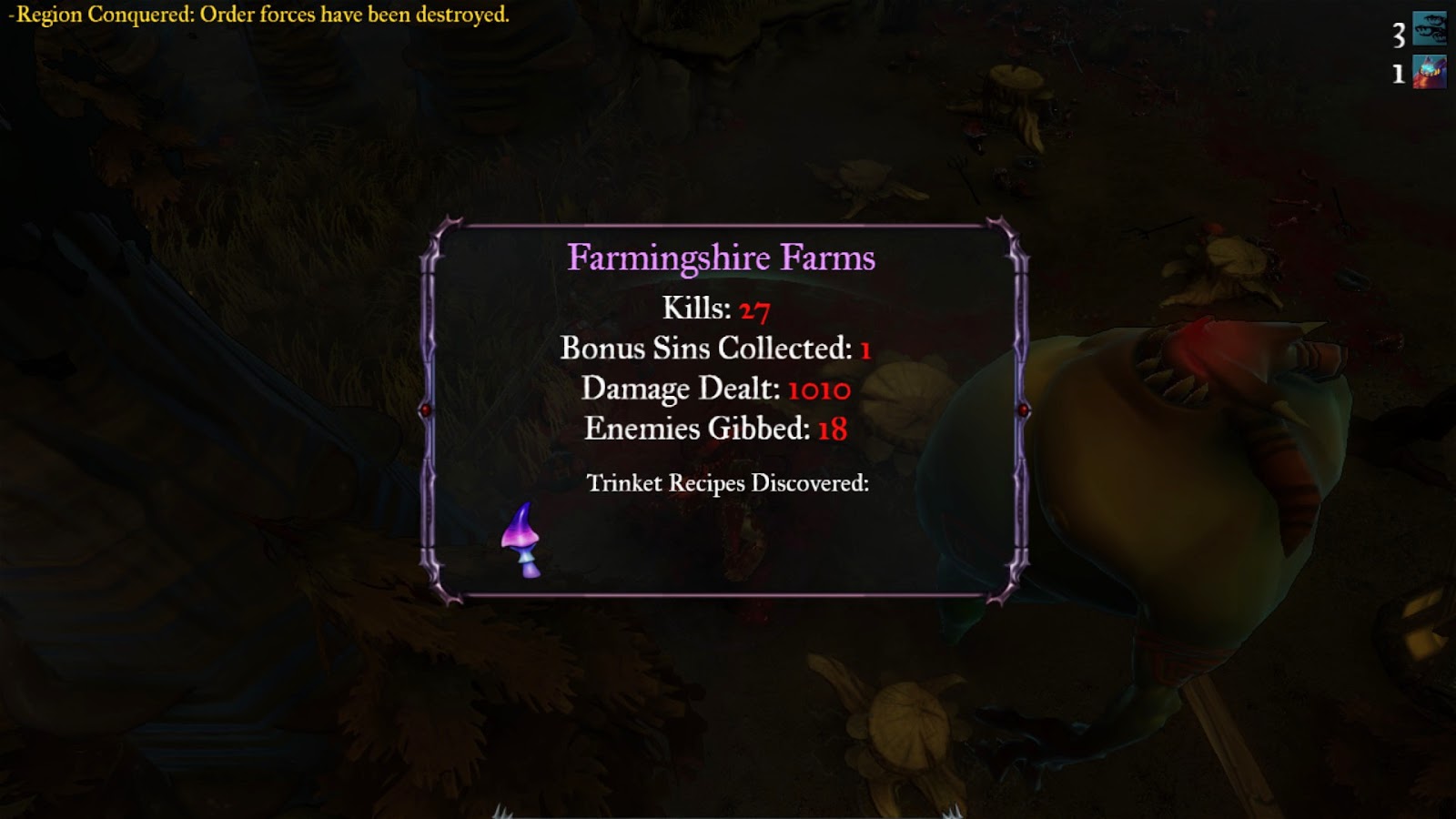
All the following screenshots are from the 0.8.0.3-version.


24 April, 2013

AMD + SoC + ARM

The previous post was about AMDs current bugdet-line mobile processors. Before that, I posted (in Norwegian) about their plans for future mobile solutions.

They are basing their new budget-line / mobile processors on the "Jaguar" microarchitecture (the pre-decessing C- and E-series are "Brazos" based), and will sport 64-bit dual- or quad-core ("Bobcat" x86-cores) with integrated Radeon 8000 graphics (80-core GPU), significantly outperforming any "Atom"-chips with integrated graphics from Intel.

The new "AMD Embedded G-series System-on-Chip" sets will be made in two versions (or architectures): x86 and ARMDetermining which architecture a chip is based on, is as easy as looking at the CPU-logo; the ARM-version will have an "A" in the lower right corner of the logo and the x86-version will have an "X" (as shown in the picture below).


AMDs "Embedded G-series SoC" seems to be direct competition against Intels "Atom" budget-line. CPU-vendor competitiveness is, as we all know (at least the one's paying attention), a good thing :-P

It will be exciting to see how the combination ARM+Radeon will operate and behave performance-wise :-) since I've been an avid embedded (ARM ) fan for years, it'll also be quite interesting to see AMD play with both CISC- and RISC-based designs in the same series.

AMD press-release:
http://www.amd.com/us/press-releases/Pages/amd-embedded-gseries-2013apr23.aspx

Ultrabook for my sister

I was recently asked by a family-member to look for a decent study-laptop for my sister. I'll admit I was kind of thrilled. I was playing around with the idea of finding a low-budget laptop, with decent specifications. Having done a machine-architecture report for school (x86/x64) last year, I had become thoroughly aware of what AMD has been doing lately.

I have always been a fan of AMD. Mainly because of their support for hardware-hacking (NOTE: this voids any warranty) and / or chip overclocking (in many cases also voids any warranty), and their clever innovation of techniques (amd64/APUs). And last but not least, their open and full support of FOSS.

In my report, I wrote about AMDs budget-line processors; the "FusionC-series and E-series, direct competitors to Intels "Atom" budget-line processors. In fact, the C-chips match similar Atom-chips in both TDP (Thermal Design Power) and clock-frequency (GHz). Whereas the E-series is higher clocked, resulting in a higher TDP, but also making it more similar to an Atom-chip system paired with a dedicated GPU (e.g. ION2).

My sisters computing-needs do not require massive number-crunching abilities, but it shouldn't be sluggish in operation either, so I went for the high-end mobile-solution: AMD E-450 (codename: Zacate) APU (Accelerated Processing Unit) used in a 13,3" LED-screen Asus model U32U laptop with 4GB DDR3 RAM.

The AMD E-450 is a 64-bit dual-core ("Bobcat" low-power x86-cores @ 1,65GHz) processor with an integrated Radeon HD 6320 GPU on the same die (which AMD markets as a so-called APU-chip), with a total TDP of 18 watts.

(The basic idea behind this type of system, is that: the stripped, low-power x86-cores (x2) does most of the general-purpose processing, but, hands over floating-point unit calulations to the GPU-cores on the same die, thereby eliminating both process load-balancing and CPU-GPU inter-communication delays.)

Asus product-link:
https://www.asus.com/Notebooks_Ultrabooks/U32U/

When unboxing the machine, I was pleasantly surprised :-) with the battery firmly locked-in the thing didn't weigh more than 1,55 kg! Didn't take up much space when closed either so it was a perfect carry-on companion and study-tool.

First boot took a few minutes, Windows always does at "first-boot".

Running Windows Update took around 4,5 hours to complete from a fresh install, after downloading everything that is (on a 2Mbps cable-DSL connection no less :-P *shrug*).

Installing Microsoft Office 2010 (with the help of an external USB 2.0 CD-ROM drive) actually didn't take all that long, and it ran like a dream.
Overall the CPU-response was acceptable when installing and pretty good in operation. It won't blow away anything with 4GB of RAM, but in combination with AMDs Fusion (referred to as a: Heterogeneous System Architecture by AMD) chipset and APU-chip, it didn't do half bad for an ultrabook-like laptop.

This was my first ultrabook-like experience, and I must say, I am impressed :-) I want one! Strictly speaking, the U32U does not fit the ultrabook-specification (being an Intel-trademark, and the U32U being AMD-based).

Personally (speaking as a poweruser), I would probably cram at least 8GB of RAM into the machine afterwards. And replace the 320GB HDD with an SSD for both system-speed and machine-weight. But for my sister, it was perfect! :-)

I might also add that I actually own two machines with Atom-processors, and the E-450 blew them both away on graphics and processing-power.

Edit:
I had to add a total of 8GB DDR3 RAM modules to the machine. She complained that it was getting sluggsish after a period of time. I had apparently not anticipated her usage-patterns good enough. 4GB of RAM was a little weak, especially if you want to run office-suites and similar resource-hogging software.

23 April, 2013

AMD, SoC og ARM.


AMDs nye satsing på bærbare enheter heter "AMD Embedded G-series System-on-Chip" (kort: SoC), basert på AMDs nye Jaguar mikroarkitektur.

AMDs pressemelding:
http://www.amd.com/us/press-releases/Pages/amd-embedded-gseries-2013apr23.aspx

Det er nok den nye strømgjerrige serien som skal konkurrere direkte med Intels "Atom"-serie (benyttet i NAS-bokser, nettbrett, mini-laptoper, osv.).

Brikkene skal lages i to arkitekturer: ARM og x86. Om brikken er ARM- eller x86-basert ses nede i høyre hjørne av logoen hvor det blir trykt en "A" for ARM, og en "X" for x86 (bildet ovenfor viser en x86-basert brikke). De vil også komme med to eller fire kjerner som vil kjøre på en klokkefrekvens mellom 1 til 2 GHz. Grafikkmessig stiller AMD seg bedre enn Intel. Disse brikkene har integrert GPU basert på Radeon 8000 som i følge AMD gir opptil 5 ganger bedre grafikkytelse enn tilsvarende "Atom"-prosessorer fra Intel.

Personlig liker jeg veldig at AMD leker med å blande CISC / RISC i en brikke-serie, og det vil bli voldsomt spennende å se hvordan brikke-kombinasjonen ARM / Radeon vil oppføre seg i bruk.

Hardware.no-artikkel:
http://www.hardware.no/artikler/dette-er-amds-nye-atom-konkurrent/132867

16 April, 2013

Oppgradering?


Blir nok heller satsning på Vishera mikro-arkitekturen hvis jeg skal oppgradere kjerne-systemet :-) FX-8350s etterkommer :-) ekte "octa-core" 5GHz ulåst FX-prosessor :-p

Link:
http://www.hardware.no/artikler/amd-planlegger-trolig-ny-raskinn-prosessor/132573

02 March, 2013

Upgrade?


At the moment, I usually sit on an AMD Phenom II X6 workstation/server/gaming-rig. But I'm thinking of upgrading to AMDs Bulldozer Vishera "true" octa-core micro-architecture.

With an octa-core based CPU running under the hood, I'll be able to compute data-loads / -streams that will be more common in the time coming.

Not that more cores are absolutely necessary, nor instantly, but with coming gaming-consoles sporting custom octa-core chips, homebrew and the like will demand (more powerful, and in some cases, distributed) computing-power.

6 cores (hexa-core) running @ 3GHz is plenty enough for most tasks today, from mundane (simple 3D) flash-games to more comprehensive high-definition 3D gaming. But 2 extra cores and an extra GHz of clock-frequency will definitely raise the bar enough to postpone sluggishness and lag.

09 December, 2011

h3x4c0m

OK. Computer-building has always been a hobby of mine. Later years have shown that high-end components don't always have to cost an arm and a leg. So I figured I'd do a build-project where I would build a hybrid workstation / VM-lab / gaming-rig, with as much computing-power as my limited budget would allow.


The following became my project-goals:
  • Build an HTPC (Home Theatre PC) with std.-dimensions for rack/stack placement.
  • Get the most powerful and technically up-to-date cpu for as little as possible, most likely an alternative to Intel (AMD).
  • Shove in, at a very minimum, at least 8GB of RAM with decent heat spreading.
  • Make due with the stock cpu-fan and add cabinet fans accordingly.
  • Use a customizable O.C.(overclocking)-motherboard for tweaking-purposes.
I figured I'd base the machine on an AMD chipset and processor because they've always been more on the cheaper end, compared to Intel, without losing too much of the competing processing-power (allthough AMD chips generate quite a lot of heat in contrast to Intel's).


The basic assembly was quite easy. Every screw and spacer needed was included with the cabinet to ensure a good fit for the MicroATX motherboard.


Installation of the components on the motherboard was also pretty straightforward. Although I forgot to lock the cpu-chip into the cradle before I fastened the cpu-fan over it :s doh!


Silverstone's starter-level cabinet "Milo" did the job I wanted it to. It was slimline and spec-standard so it fit nicely on my Denon receiver with a Pioneer DVD player and a Canal Digital PVR on top of it, all without over-heating any metal-surfaces.
System-disk. Period ;)
Only annoying thing I didn't think about was if I wanted to add a PCIx graphics card, it has to be a "low-profile" spec-card to fit in the low cabinet. But for now the embedded HDMI port on the M/B will do (I eventually added a low-end GeForce GT520 1GB GDDR3).


I could fit up to 3 hard-drives total, but I only used a 250GB Western Digital hard-drive for personal files (/home Linux partition) and a 60GB ForceGT Corsair SSD for the OS (Linux). The SSD was a definite improvement both on heavy word-load effectiveness and boot-up (it boots Debian GNU/Linux / Ubuntu Desktop / Linux Mint in less than a few seconds!)

A metal bar is used to keep the cabinet sturdy, and does an excellent job.


One thing I noticed when installing the OS after first bootup, was that all the six cores (yes ;) that's SIX cpu-cores :p) reported an individual total processing-power of a mere 800MHz! WTF!?

This couldn't be! 800MHz x 6!? At first I figured it was the Cool'n'Quiet-feature of AMDs processor-lines that throttled everything down to save power and/or cool the cpu. This was not the case.


As I read the motherboard webpage, I realized the cpu was released after the motherboard. And even though it listed the cpu as compatible, it also said it required an EFI-update to be able to take full advantage of a hexa-core processor.
Well, that figures... So, I aggravatingly downloaded the mentioned EFI binary-blob on a USB-stick, and proceeded to flash the motherboard.

After booting up the newly upgraded firmware, it listed the cpu with the correct specifications :) YAY-HOORAY! ;D

Without discrete graphics card.

With discrete graphics-card.
* Asus GeForce GT520 2GB 64-bit GDDR3 PCie-2.
I haven't really had the time to properly benchmark the performance yet. And I think I'll postpone it until I have a proper cpu cooling-system (preferably liquid-cooling, but I haven't been able to find a low-profile cooling-system that will fit the SilverStone Milo HTPC-cabinet yet).

For now, it has shown exceptional potential as a file-/web-server, daily mailer/browser, HD multimedia powerhouse and compilation workstation :] so I'm really looking forward to pushing it to the edge :D


Next project is setting up an advanced NAS box, preferrably with iSCSI-support for Virtual Machine network-storage :]


NAS-project update: http://blog.pizslacker.org/2012/02/nas-for-vmwaremediafiles.html

Discrete graphics upgrade (Sep'2014):

New (as of Sept'2014) Sapphire Radeon HD 6670 1GB 64-bit GDDR5 PCIe-2.1 discrete graphics-card
+
Supplementary (for separate iSCSI-subnet) MiniPCIe Gigabit Ethernet card

With new Sapphire Radeon HD 6670 1GB 64-bit GDDR5 PCIe-2.1 discrete graphics-card.